202 BC, by the Wujiang River. At the end of the Qin Dynasty, Yang happy, a farmer, desperately tried to snatch a leg of Xiang Yu, the overlord of Western Chu, from the rebel army in order to collect the pension for his brothers who died in battle. As a result, he was named Chiquanhou by Liu Bang, the founder of the Han Dynasty. He rose from a mud-legged man to a prince of the empire.
But this leg bone, which brought glory and wealth, also became a debt that could not be repaid.
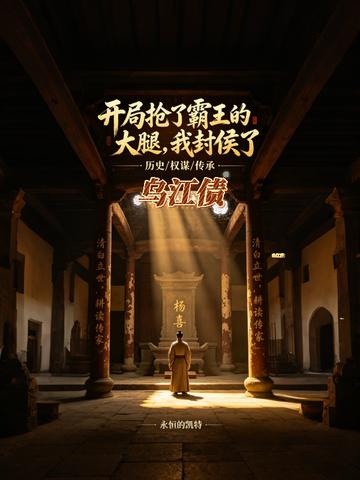
During the strife in the court, his seven-year-old son's legs were trampled by a frightening horse and he became a cripple; he privately offered sacrifices to Xiang Yu's tomb in the ancestral hall and was reported, and was imprisoned and nearly executed. He carried a thorn to plead guilty, knelt down and entered the palace, spread out all his worst regrets on the gold bricks, and then saved his life. From then on, he dismissed his servants, leveled the garden, planted radishes, and carved a family motto on the pillars of the ancestral hall - "Plow and read to inherit the family, and live a pure life."
He thought the debt was paid off. He didn't know that this debt had just begun...
From the Western Han Dynasty to the Sui Dynasty, for eight hundred years, the descendants of the Yang family struggled to survive in the cracks of history: the fourth generation Yang Chang governed the country by growing radish and became the prime minister of the Han Dynasty; the fifth generation Yang Zhen did not receive a penny in his life, and his reputation as "God knows that God knows that I know that son knows" spread throughout the world; The generation Yang Xiu relied on his talent and arrogance, but he guessed Cao Cao's thoughts but was beheaded in public. Before his death, he carved on the prison wall "It is contrary to the teachings of our ancestors, and this is what we must do."
For eight hundred years, every member of the Yang family has been adhering to that family motto in their own way: some use hoes, some use pens, some use political achievements, and some use their lives. They adhere to the principle of "creating a clean life, cultivating, studying and inheriting the family" without wavering.