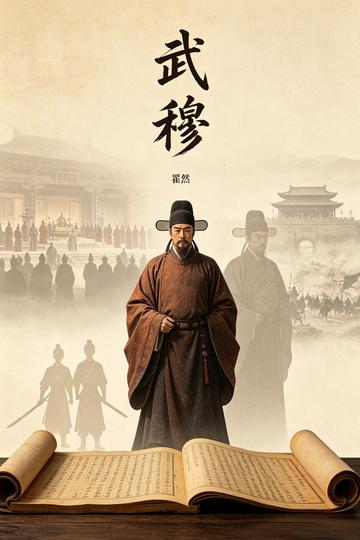
Wu Mu is an approximately 110,000-character alternate-history novel built around the premise that Yue Fei did not die at Fengbo Pavilion. It rewrites the court and battlefields of the Southern Song during the Shaoxing era. On the twenty-ninth day of the twelfth lunar month in the eleventh year of Shaoxing, Zhao Gou withdraws the order for Yue Fei's execution at the last moment. Yue Fei walks out of the imperial prison, only to step into an even more dangerous game. He is promoted in title but demoted in practice to Deputy Commissioner of the Bureau of Military Affairs, and investigates the embezzlement of military grain amid Qin Hui's layers of entrapment, uncovering a corruption network stretching from the Ministry of Revenue to Qin's residence. He wins the people's support while fighting an epidemic in Qizhou, only to be accused of "buying popular support." He introduces a military farming system in Ezhou, turning swords into plowshares, only to be criticized by the upright officials for "lacking personal virtue." Meanwhile, a new Jin emperor takes the throne, and the hawkish general Salihhe launches a surprise attack on Ezhou with the Guaizi cavalry. Yue Fei's eldest son, Yue Yun, and Li Ruotong, an orphan from the Taihang Mountains, face three thousand cavalry with just three hundred men at Qingshan Pass, completing their transformation from youths into commanders. The novel centers on Yue Fei, with Qin Hui as his counterpart, and Yue Yun, Li Ruotong, and Yu Yunwen as its next generation of characters. Through parallel narratives of political power struggles and bloody battles, it explores the limits of loyalty, the true meaning of military strength, and the weight of an unblemished reputation. The memorable line "A clean reputation is like wheat, its roots lie in the soil" captures its central idea: when faced with false accusations, don't argue or rage; sink your roots deep. This is a story about how conviction survives and is passed on through the narrow spaces between rival powers. Every chapter combines historical gravitas with human depth.