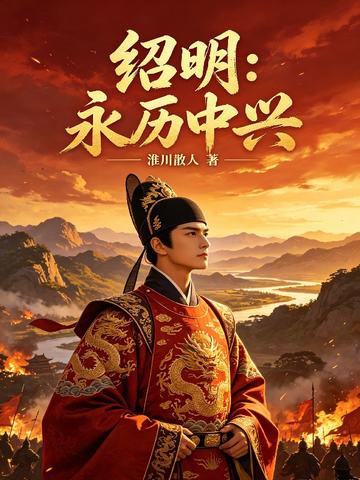
I have been appointed by Heaven to rule the Southern Kingdom. I am named Yongli and am determined to continue the Ming Dynasty. Nowadays, barbarians are riding everywhere, and their clothes and clothes are in ruins. In this autumn of life and death, I dare not fall down. I vow to clean up the captive atmosphere, regain the old capital, inherit the great legacy of my ancestors, and save all living beings. All the innocent sons of the Ming Dynasty should rise up after hearing the news and work together to achieve the great cause of ZTE!
Reader comments
Five stars, nothing to say. . The author is very familiar with the Ming Dynasty system. From this point of view, it can be seen that he has put real effort into it. Although the depiction of the battlefield is slightly worse, this is not a weakness. . After all, it is the king who is coordinating the battle from the rear, rather than going to the battlefield in person. He only needs to control the court and strategize. After all, it is more difficult for a monarch to know people and employ people than to do everything himself. . It's just that there are too many details related to victory or defeat on the battlefield, and I don't want it to be a mindless article about winning every battle. . So far, it looks like it has a lot of potential and the control is very good.
Overall it's a pretty good book and deserves five stars. In many places, it can be seen that the author has done his homework, and there is no embarrassing scene where the ancients are full of contemporary terminology, which is common in other historical texts. The general plot and deductions are written based on historical records. The plot generally advances smoothly and slowly, without any outrageous subjective assumptions, nor does it shout slogans like other late Ming Dynasty novels.
However, there are still some shortcomings, that is, the writing is somewhat crude, especially the battlefield battles and the reform process that should be focused on have been brushed aside. Overall, it seems a bit thin and unconvincing.
The taste of Kodak is still a bit strong, it's best to focus on designing your own frame [laughter]
Currently, five stars can be given, but it is easy to remove the merit, but it is difficult to achieve the final result.
Five stars, nothing to say. . The author is very familiar with the Ming Dynasty system. From this point of view, it can be seen that he has put real effort into it. Although the depiction of the battlefield is slightly worse, this is not a weakness. . After all, it is the king who is coordinating the battle from the rear, rather than going to the battlefield in person. He only needs to control the court and strategize. After all, it is more difficult for a monarch to know people and employ people than to do everything himself. . It's just that there are too many details related to victory or defeat on the battlefield, and I don't want it to be a mindless article about winning every battle. . So far, it looks like it has a lot of potential and the control is very good.
Overall it's a pretty good book and deserves five stars. In many places, it can be seen that the author has done his homework, and there is no embarrassing scene where the ancients are full of contemporary terminology, which is common in other historical texts. The general plot and deductions are written based on historical records. The plot generally advances smoothly and slowly, without any outrageous subjective assumptions, nor does it shout slogans like other late Ming Dynasty novels. However, there are still some shortcomings, that is, the writing is somewhat crude, especially the battlefield battles and the reform process that should be focused on have been brushed aside. Overall, it seems a bit thin and unconvincing.
The taste of Kodak is still a bit strong, it's best to focus on designing your own frame [laughter]
Currently, five stars can be given, but it is easy to remove the merit, but it is difficult to achieve the final result.