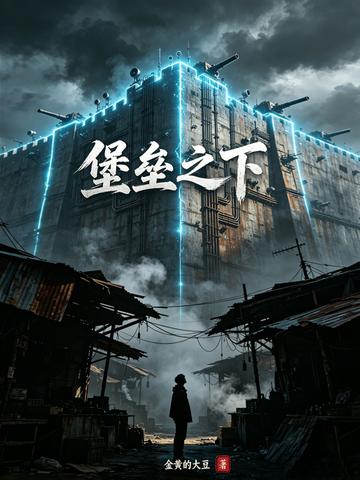
After the nuclear war, catastrophe spreads and radiation distorts everything. Humanity relies on giant fortresses to survive, and high walls separate two worlds. The inner circle is filled with resources and forts, while the refugees in the outer circle are struggling in shantytowns, becoming flesh and blood as a buffer when alien beasts attack. Smuggler Ling Feng travels around various fortresses, using a modified pickup truck and an old federal bionic robot CX-07 to run gray routes. He just wants to make a stable living and has always pursued the principle of "doing more is worse than doing less".
At the beginning of an incident, he accidentally got involved in a factional dispute; he was commissioned by a high price to go to Eastern Europe and pick up Zhao Xi, a scientific research girl from the inner circle. The girl specializes in radiation ecology and possesses the key knowledge to decipher mutations and movements. She is a core reserve talent that all forces compete for. On the way back, the two were ambushed by a bounty and were forced to flee into the radioactive jungle known as "no entry, no exit".
Ling Feng never knew that from taking orders, killing people to escorting girls, every step fell into the top chess game. The four forces in the inner circle are secretly wrestling with each other, and the high-altitude star sea system overlooks the earth. Behind the periodic proliferation of alien beasts, there is a crisis of global extinction. The fireworks of survival at the bottom and the indifference on the high wall confront each other. A chess piece at the bottom is about to glimpse the hidden truth of human existence.
Reader comments
The temperament of this book was determined from the beginning: it is not driven by "the protagonist becomes stronger", but by "how people survive in the system."
Ling Feng was just a smuggler when he appeared. It is better to do less than to do more, which is the rule he has lived by until now. But as the story moves up layer by layer, from the outer circle to the inner circle, from the wilderness to the fortress, from smuggling to being involved, he is always in a state of being "pushed along". This book does not provide the refreshing feeling of "I decided to become stronger". What it provides is an older narrative texture: some roads are not what you want to take, but when you get there you find that there is no other way.
This "pushed away" texture is also reflected in its treatment of "loss". There is no sensationalism or exaggeration in the book. Sadness is accomplished through pauses, silence, and unspoken words. Some people never come back, some robots dream, and some are not seen until the person leaves.
It does not promise victory. It only promises one thing: Even if you lose, you won't stop. The structure of the story is set, all that's left is to see how far it goes. If you are willing to give this book some time, it will give you a very quiet staying power. It is not that you will forget about it after you finish it, but that you will still think about it when you close the book.
If you are fed up with the routine of "system panel + upgrade to defeat monsters" and want to read a novel that really talks about "how do people stand in the apocalypse", it is worth reading.
Personally, I think there is a problem. The protagonist accepted a mission, was ambushed, and almost lost his life. He actually went to take revenge on a large group on the opposite side by himself. I won't ask the person who took the task for help. Let's deal with this big group together. They are all their enemies anyway.
The temperament of this book was determined from the beginning: it is not driven by "the protagonist becomes stronger", but by "how people survive in the system." Ling Feng was just a smuggler when he appeared. It is better to do less than to do more, which is the rule he has lived by until now. But as the story moves up layer by layer, from the outer circle to the inner circle, from the wilderness to the fortress, from smuggling to being involved, he is always in a state of being "pushed along". This book does not provide the refreshing feeling of "I decided to become stronger". What it provides is an older narrative texture: some roads are not what you want to take, but when you get there you find that there is no other way. This "pushed away" texture is also reflected in its treatment of "loss". There is no sensationalism or exaggeration in the book. Sadness is accomplished through pauses, silence, and unspoken words. Some people never come back, some robots dream, and some are not seen until the person leaves. It does not promise victory. It only promises one thing: Even if you lose, you won't stop. The structure of the story is set, all that's left is to see how far it goes. If you are willing to give this book some time, it will give you a very quiet staying power. It is not that you will forget about it after you finish it, but that you will still think about it when you close the book. If you are fed up with the routine of "system panel + upgrade to defeat monsters" and want to read a novel that really talks about "how do people stand in the apocalypse", it is worth reading.
Personally, I think there is a problem. The protagonist accepted a mission, was ambushed, and almost lost his life. He actually went to take revenge on a large group on the opposite side by himself. I won't ask the person who took the task for help. Let's deal with this big group together. They are all their enemies anyway.
It's really well written.