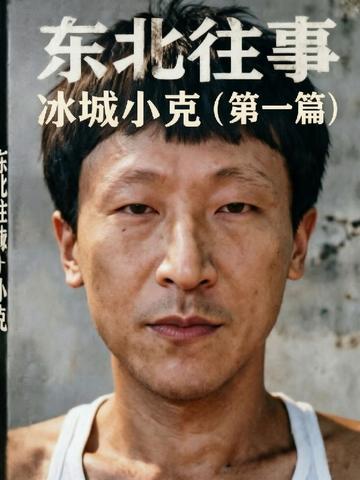
This book is about a group of people, a group of people living in Northeast China in the 1980s. Some were tall, some short, some clever, some stupid. They ran with gangs, fought over territory, opened casinos, and chased women. In the end, most of them had their lives ended by a bullet. I’m not writing their biographies. They don’t deserve that. I want to write about an era. That era was like a dense fog covering all of Northeast China. Smoke still rose from the chimneys of state-owned factories, but the plumes grew thinner and thinner. Workers still went to their jobs, but their wages were paid less and less often. Some started setting up stalls on the streets, some began buying and reselling goods, and some joined the underworld. Xiao Ke emerged from that fog. He wasn’t tall, barely five foot three. He had a sharp mind, but put it to bad use. He ran casinos and skimmed the take from gambling; once, he took in more than 90,000 yuan in a single night. He wore suits and ties, drove a Mercedes, and kept a mistress. On the surface, he was a respectable businessman. He was ruthless, breaking the noses of who knows how many people. He was also loyal, and his underlings were willing to risk their lives for him. He was clever, but he put his cleverness to the wrong use, which was more frightening than stupidity. In writing this book, I drew inspiration from Kong Ergou’s A History of the Underworld’s Twenty Years. It’s full of banter and commentary, with the occasional “analysis of the underworld matrix.” The story is adapted from real-life material about Xiao Ke, Qiao Si, Li Zhengguang, Xiao Fei, Yang Mantou, and others, found online. The fictional parts are there to make the story more entertaining. The real parts are already shocking enough. One last thing: public safety in Harbin today is different from what it was in the 1980s. That’s not because the law has improved; it’s because people have changed.