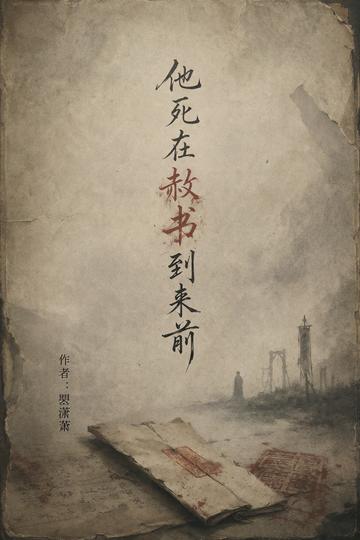
Shen Zhaowei had known since childhood that documents could determine land allotments, tax grain, and marriage contracts. Only later did she learn that documents could also determine whether someone lived or died.
Lu Wenzhou had helped copy a relief-grain ledger for the villagers. Because of the words “grain not yet received,” someone erased the word “not,” turning him into a condemned prisoner accused of falsely claiming to have received the grain.
She filed petitions, investigated the accounts, and pursued the matter all the way to the prefectural government, fighting bit by bit to transfer his name from the death register to the spring amnesty list.
On the seventeenth of the third month, before the second quarter of the hour of noon, she rushed to the execution ground in the West Market, clutching a duplicate of the prefectural Justice Office’s case records. Lu Wenzhou saw her, and everyone heard her too.
But the execution order had not been withdrawn, and the original document had not arrived.
At the third quarter of the hour of noon, the blade still fell.
That night, the original amnesty edict arrived at the county office.
The next day, Qingchuan County posted a notice: Lu Wenzhou was pardoned by imperial decree. The pardon came too late to save his life. All she could do was reclaim the name of an innocent man.