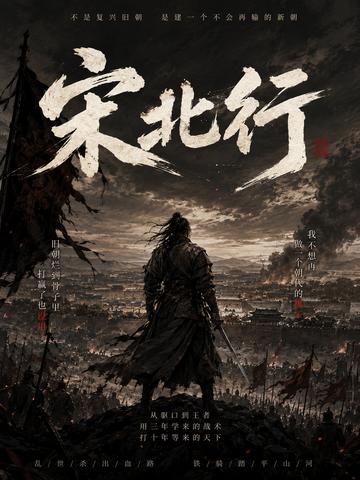
In 1234, the Mongolian army moved south.
Lu Chen spent three years in the Qikou Camp, memorizing the Mongolian patrols, guard changes, and food routes. He also remembered a truth: if Qikou walked at the front of the military formation, his chance of survival was only slightly better than that of the dead.
On the day the Mongolian army broke camp, he stole a horse and fled south alone.
When he returned to Song Dynasty, he discovered that there was no way for him to survive here either. The military camp was short of food and the people were displaced. The general used the natural danger as a talisman, but the Mongolian cavalry had already reached the door.
Then keep it yourself.
Starting from a few refugees, Lu Chen relied on a military camp map that was memorized in his mind to intercept grain routes, focus on fine work, and train new soldiers. He defended a camp and a city; from Xiangyang to Qinba, from Lizhou to Luoyang, he led a group of people who had been left behind by the times and forcibly carved a way out.
But when Xiangyang finally fell six years later, and when the Lin'an court turned "loyalty" into a rope for recruiting peace, Lu Chen realized that driving away the Mongols did not mean that the world would have a tomorrow.
He did not want to extend the life of the old dynasty.
He wants to stop the cattle being treated as livestock, and let the people have food, law, and schools; he wants to build a country that does not rely on the luck of the emperor, generals, and private soldiers, nor does it put people on ropes again.
This is the story of a deserter who crawled out of the mud and finally decided to set the rules for the world.