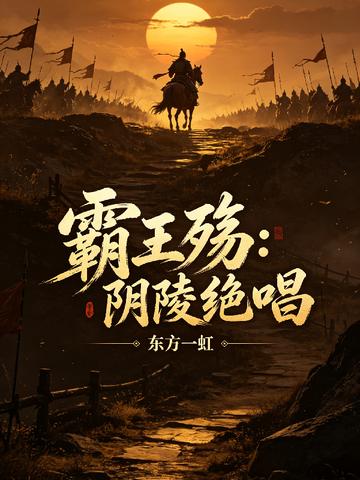
Winter, Year Five of the Han dynasty. The siege at Gaixia. Songs of Chu echoed from every direction. Xiang Yu escaped south under cover of night with eight hundred cavalry, intending to cross the Huai River and make for Jiangdong. But Heaven did not favor Chu, and men turned against him too. Lost at Yinling, he was misled by the farmer Chen Duo, who falsely pointed him down the left-hand road, leading his army into a marsh. Guan Ying’s cavalry caught up with him, and at Dongcheng, his twenty-eight remaining riders fought like cornered beasts.
A tale passed down through generations in Dingyuan says that Yu Ji was buried at Jieyu Mound, and Xiang Yu died by the Chi River. He did not take his own life, nor was he slain in battle. Instead, the Han army “strangled” him, a death more humiliating than beheading: they looped a silk cord around his neck and hanged him beneath an ancient willow. Liu Bang offered a thousand taels of gold and a fief of ten thousand households as a reward. Tempted by such riches, the Han generals fought over the credit and dismembered him. The great conqueror was denied even an intact corpse.
This novel takes that history as its foundation and Xiang Yu’s death as its mirror, reflecting the cycles of fate, the unfathomable nature of the human heart, and the downfall of heroes. It does not dwell on the impassioned “refusal to cross back to Jiangdong,” but on the despair of having nowhere left to cross; not on the tragic grandeur of choosing death, but on the truth of his brutal humiliation.