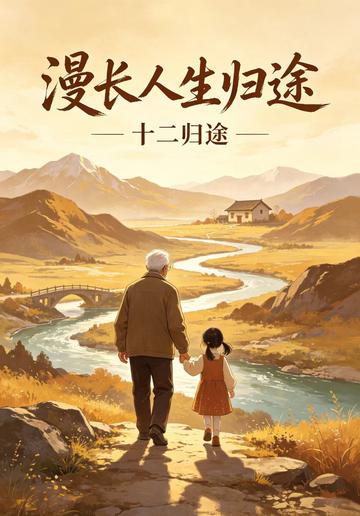
This is a 1980s modernist period novel, which mainly tells the historical changes in rural areas of North China, and the family stories of compatriots on both sides of the Taiwan Strait who are separated from each other and long for the reunion of their relatives. This article is based on the background of a farmer's family in North China. The story is divided into two lines. One story line tells the story of Chen Tingguang, a retired veteran who was drifting away. He was unable to return to his hometown and lost contact with his relatives in his hometown. Finally, the old man went through ups and downs and finally returned to his hometown after seventy-five years at the age of 100. He hoped that he could return to his roots in a century and be buried in his hometown to accompany his family. Another story line tells the story of Chen Guosheng, who gave his daughter up for adoption due to family reasons when he was young. Later, he repeatedly hoped to recognize his biological daughter, but was rejected by the daughter. Later, after the efforts of the family and forty years, he finally recognized his biological daughter. The two stories are connected by family ties. This article uses the relationship between family members and relatives who have drifted away, and uses the stories of small people to show the morality and feelings of loving the country. It uses the life changes of ordinary people to show the gradual development of the times. At the same time, from the perspective of personal family affection, it shows the story of the blood connection between compatriots on both sides of the Taiwan Strait, the constant separation, and the desire for an early reunion.
Reader comments
A true description of the living conditions of that era in the rural areas of the four provinces of Shanhe.
It truly describes the childhood life of those born in the 1970s and 1980s in rural areas of North China, which is full of memories.
A true description of the living conditions of that era in the rural areas of the four provinces of Shanhe.
It truly describes the childhood life of those born in the 1970s and 1980s in rural areas of North China, which is full of memories.