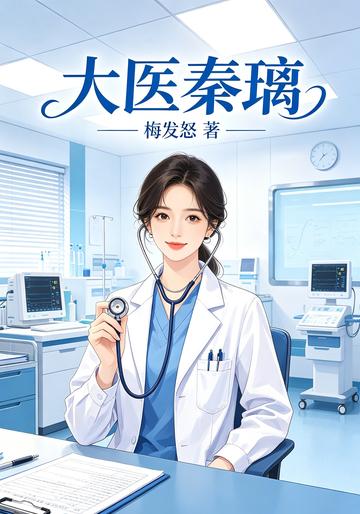
On her first day at Renji Hospital, Qin Li was assigned to the emergency surgery department, which is the busiest, most tiring, and most likely to be scolded.
Everyone felt that this thin female doctor would not last long. It wasn't until she performed a stitch that she taught amazingly, and she saw at a glance the risk of missed diagnosis. A morning meeting used documents and images to silence the doubters.
At the same time, the "Lancet System" that only Qin Li could see was quietly bound.
From emergency debridement to major hepatobiliary surgery, from a scorned female doctor to a rising surgical star with national attention, Qin Li did not rely on coquettishness or love from heaven, but a terrifyingly stable scalpel.
The cold-hearted cardiothoracic surgeon paid close attention to her, and the gentle pharmacist tried to take care of her. He challenged her again and again with his tough words, but was beaten down again and again.
Qin Li was completely unaware of this.
She just raised her head and said, "Excuse me, I'm going to the operating room."
Reader comments
There are only a handful of female doctors. Teacher Wang, who has a lot of roles, is from the nursing department.
There are too many male doctors.
In fact, whether it is a medical school or a hospital, female medical students and doctors account for at least half.
You may say that which hospital in your home has more male doctors, even the gynecology department is full of male doctors, blah blah. But in novels, whether they are novels written by women, or novels in which the protagonist is a doctor, or novels in which the doctor protagonist has a medical system, female doctors are mostly the most basic.
From the front, the overall description is very light. It seems that there are only language and partial descriptions of scenes and characters, and there are no breaking points or emotional fluctuations, referring to the protagonist and other doctors.
There are only a handful of female doctors. Teacher Wang, who has a lot of roles, is from the nursing department. There are too many male doctors. In fact, whether it is a medical school or a hospital, female medical students and doctors account for at least half. You may say that which hospital in your home has more male doctors, even the gynecology department is full of male doctors, blah blah. But in novels, whether they are novels written by women, or novels in which the protagonist is a doctor, or novels in which the doctor protagonist has a medical system, female doctors are mostly the most basic.
From the front, the overall description is very light. It seems that there are only language and partial descriptions of scenes and characters, and there are no breaking points or emotional fluctuations, referring to the protagonist and other doctors.