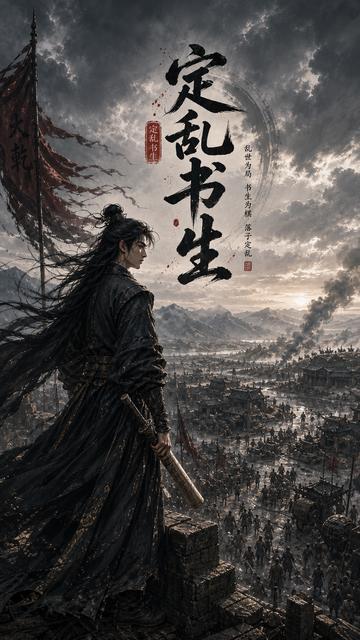
The protagonist, Chu Yanzhou, comes from China in the year 2100 and was the top scorer in the national college entrance exam that year. After the exam, he was looking up information at home about China’s fractured ancient eras. As he read about the history around 304 AD, the anguish and indignation he felt at the thought that “everyone knew great upheaval was coming, yet no one could stop it” grew so overwhelming that he transmigrated by accident.
He arrives in a parallel world at a point corresponding roughly to 303 AD. Its dynastic structure, aristocratic politics, provincial system, northern frontier tribes, and refugee crisis closely resemble the situation in China near the end of the Western Jin dynasty. But this is not a copy of real history: it is a fictional age of chaos that the protagonist can reshape.
There is no magic or sorcery in this world, but it has a well-established martial underworld. Prestigious sword schools, escort agencies, gangs, assassin groups, medical sects, and practitioners of esoteric arts are scattered across the provinces. Martial arts focus on bones and sinews, qi and blood, breathing, the flow of force, and weapon techniques. The greatest fighters can take on ten opponents at once, cut down enemy commanders and seize their banners, or launch a night raid to turn the tide, but they cannot reshape the world out of thin air. As chaos looms, the martial underworld ceases to stand apart from the rest of society. Sects begin to attach themselves to aristocratic clans, local strongmen, and military garrisons; escort routes become supply lines, and wandering heroes may be reduced to expendable fighters or defenders of the people.
More importantly, the lands beyond the Central Provinces are no empty wilderness. To the north lie grasslands and snowy plains; to the west, desert trade routes and leagues of mountain kingdoms; to the east, island nations and pirate courts; to the south, a humid continent and ancient spice kingdoms; and in the far west, heavily armored legions and a mercantile federation. The Central Provinces are the most densely populated and institutionally developed core of this world, but they are not its only center of civilization.

It's very interesting. The author with a lot of brains is different.