Everyone knows that when Xiang Yu entered Xianyang, he burned the Epang Palace to the ground in a blaze that lasted three months.
But I know that two thousand years later, an archaeologist’s shovel will prove the truth:
The Epang Palace was never completed, and the Conqueror never burned it down.
I transmigrated to the thirty-fifth year of the Qin Dynasty and became a laborer on a construction site.
A head full of engineering knowledge, two hands, and one life.
I improved rammed-earth construction, earned an unprecedented promotion from the First Emperor, took charge of a hundred thousand laborers, and oversaw the building of the greatest palace in the world.
But I discovered a greater secret hidden beneath the palace:
Buried under its foundations were ancient texts from the Xia, Shang, and Zhou dynasties, the original works of the Hundred Schools, and histories of the Six Kingdoms,
as well as the Yuzhou Ding, secretly salvaged from the Si River by the First Emperor.
Not gold or silver, but the roots of Chinese civilization.
Zhao Gao sent men to burn the granaries, block the supply routes, and plant hidden spikes at the construction site.
The remnants of the Six Kingdoms hoped the project would be abandoned, humiliating the Qin Dynasty.
Li Si said, “You’re not building a palace. You’re building the Qin Dynasty’s last shred of dignity.”
But I knew, and the First Emperor knew too,
that this palace was the last straw among the Qin Dynasty’s three great projects.
The Great Wall would not bring it down. Mount Li would not bring it down.
This palace would be the one to topple the empire.
And I was the man ordered to build it.
No matter who tried to stop me, it had to be completed.
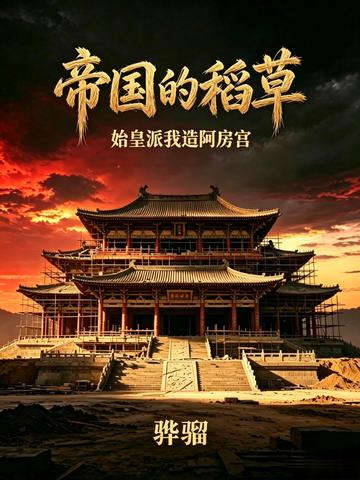
The Empire’s Last Straw
A new perspective, worth reading.