He Linghong and Liu Jie are a middle-aged couple who are "well matched" in the eyes of outsiders.
Their marriage began as a "right fit" in their early thirties. I have never loved passionately, so I plunged into the siege of firewood, rice, oil and salt. Houses, children, and money have become the only main theme of life. The seven-year itch has not yet come, and the cold war and silence have become commonplace. They live under the same roof, but they have become the most familiar strangers. The rift in the marriage gradually evolved into an insurmountable gap under attack from both inside and outside. Repair it, give up, or find another way? He Linghong and Liu Jie stood at the crossroads of their lives and were forced to face the cruelest truth in their marriage.
Reader comments
This is a sincere work that directly faces the truth about contemporary marriage. The novel uses "zero communication" as the starting point, and delicately describes the whole process of the couple He Linghong and Liu Jie from "suitability" to "estrangement". The author does not indulge in bloody plots, but focuses on the folds of daily life - silent breakfasts, forgotten anniversaries, late-night fatigue in the emergency room, and the unfamiliar fragrance of gardenia on the collar. These details are like cutting flesh with a dull knife, not painful but deep, accurately cutting through the hidden disease of the era of "marital loneliness".
The characterization is particularly commendable. He Linghong's "bluntness" and Liu Jie's "forbearance" are not labels, but shapes shaped by life step by step. He thought that making money to support the family meant fulfilling his responsibilities, but she was used to swallowing her grievances. The two people who did not know how to love spent seven years on each other, but when they were about to separate, they were brought back to the negotiation table by a bowl of boiled noodles and the words "add water slowly". This imperfect but real struggle is far more powerful than a Shuangwen-style break.
The novel's open ending is handled with restraint and warmth. There was no forced reconciliation, no miraculous reversal, just two tired people trying to "continue in another way." It makes readers believe that the way out of marriage may not be to rekindle love, but to see each other.
It is true that the writing of some supporting characters (such as Su Wan) is a little thin, but it does not obscure the overall brilliance. This is a mirror that allows everyone in the besieged city to see their own reflection. Recommended to everyone who has been silent, endured, and looked forward to it in marriage.
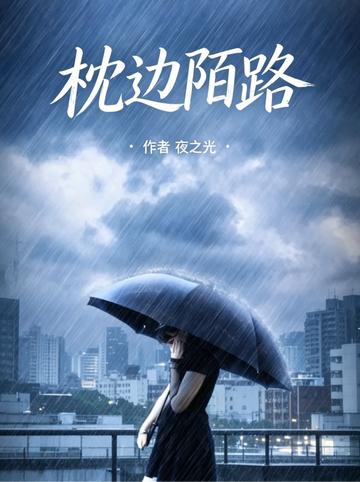
This is a sincere work that directly faces the truth about contemporary marriage. The novel uses "zero communication" as the starting point, and delicately describes the whole process of the couple He Linghong and Liu Jie from "suitability" to "estrangement". The author does not indulge in bloody plots, but focuses on the folds of daily life - silent breakfasts, forgotten anniversaries, late-night fatigue in the emergency room, and the unfamiliar fragrance of gardenia on the collar. These details are like cutting flesh with a dull knife, not painful but deep, accurately cutting through the hidden disease of the era of "marital loneliness". The characterization is particularly commendable. He Linghong's "bluntness" and Liu Jie's "forbearance" are not labels, but shapes shaped by life step by step. He thought that making money to support the family meant fulfilling his responsibilities, but she was used to swallowing her grievances. The two people who did not know how to love spent seven years on each other, but when they were about to separate, they were brought back to the negotiation table by a bowl of boiled noodles and the words "add water slowly". This imperfect but real struggle is far more powerful than a Shuangwen-style break. The novel's open ending is handled with restraint and warmth. There was no forced reconciliation, no miraculous reversal, just two tired people trying to "continue in another way." It makes readers believe that the way out of marriage may not be to rekindle love, but to see each other. It is true that the writing of some supporting characters (such as Su Wan) is a little thin, but it does not obscure the overall brilliance. This is a mirror that allows everyone in the besieged city to see their own reflection. Recommended to everyone who has been silent, endured, and looked forward to it in marriage.