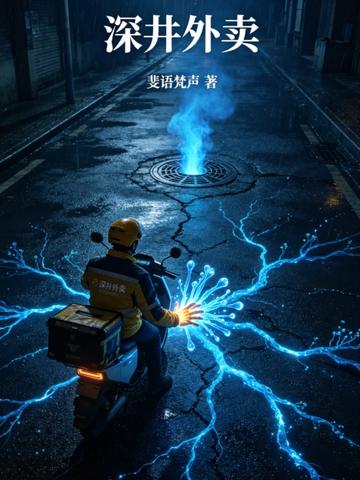
Chen Du has been running food delivery for three years and never takes any night orders. Until 1:17 in the morning, an order with blue characters on a black background was bounced five times - the pickup address: Cabinet No. 3 In the cold room of the funeral parlor on Hongqiao South Road. Delivery address: North side of the third floor of the old house, No. 17 Zhongshan North Road. Note: Leave it at the door and leave without looking at the window. Delivery fee: ¥1847.00.
He shouldn't have picked it up. But the fingers moved on their own.
The first order was delivered from the funeral home to the old house. The second order was delivered to the third underground floor of the abandoned shopping mall. The third order is under the purification pool. The delivery rules are unlocked one by one: you are not allowed to look at the source of the order, you are not allowed to refuse continuous delivery, and you are not allowed to touch anything with a temperature lower than 12 degrees during the delivery process. Delivery fees are doubled for each order. The origin of the app is unknown.
But the real problem wasn't the rules—it was that he started noticing things that shouldn't be there. A green membrane on the wall of a sewer pipe pulsing slowly in the darkness. There are neatly arranged iron cabinets in the underground parking lot that do not belong to any water supply system. And the stray cat with blue pupils across the street. Every time he finished delivering an order, it would squat under the streetlight and wait for him.
He thought he was delivering food. In fact, he is helping to rebuild the communication circuit of a copper-based life network that is billions of times older than human civilization. Each delivery address is not randomly assigned - it is a node. Each rider is not one – it is a generation. There were eight generations of riders before him. There will be others after him.
"Delivery completed" means "delivery completed". Some people only get one order in their lifetime.