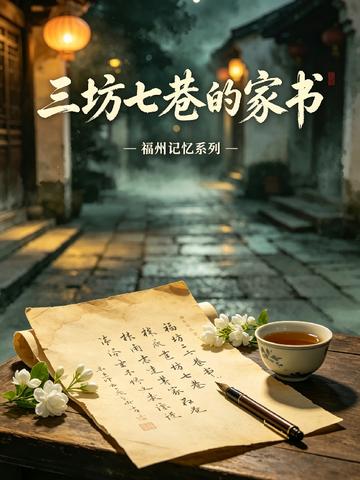
The bluestone slabs in the three lanes and seven alleys cannot carry a hundred years of wind and frost, nor can they carry letters from home that span mountains and seas and are soaked in blood and tears.
In the winter of 1905, in Fuzhou's rain lane, a sedan chair entered Lin's house. She is the bride Chen Yiying, and he is Lin Juemin, a scholar studying abroad. The candlelight in the wedding room flickers, and the cracks in the world have quietly appeared: his study contains world maps, banned books and revolutionary fire, and her sleeves hide "La Traviata" and the girl's thoughts. The fragrance of jasmine is the code word, and the bluestone is the witness. An acquaintance that begins with fate and ends with life and death quietly begins.
In the spring of 1907, we said goodbye at the dock. He traveled eastward to Fusang, on a journey to exchange blood for new life; she stayed in Rongcheng, using forbearance as a shield and family letters as a bridge. In letters across the sea, secret words are hidden in mountains and rivers, and ink marks are soaked in lovesickness; in the courtyards of three lanes and seven lanes, jasmine blooms and falls, witnessing waiting and suffering.
In 1911, blood is coming. Gunfire rang out in Guangzhou, and jasmine thousands of miles away withered overnight. He sacrificed his life for justice, leaving behind his last words and will; she gave birth to a posthumous son in labor pains, guarding the empty house, family letters and the bloody thoughts in the city.
Under the blue tiles and white walls, paper is short but love is long; when mountains and rivers are broken, love and faith are eternal. This is the thousand-year-old character of Three Lanes and Seven Alleys, the forbearance and affection of the bloody era, and it is also a bloody family letter written and signed with life.