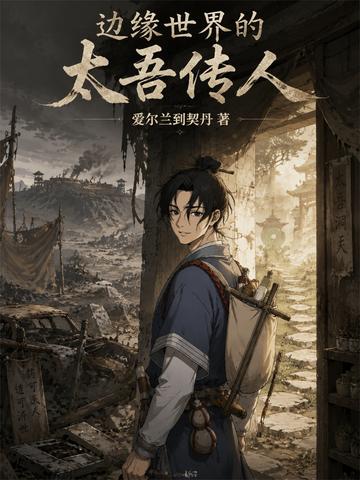
This is a world shattered by the ruins of countless civilizations. Beyond the wastelands stand fortresses from the old era, beneath the ground lie slumbering machines, wrecked ships fall from the sky, and insect swarms rise from the earth. Every settlement faces the same challenge: not how to prosper, but how to survive the next disaster.
When Xu Xingzhou transmigrated here, he was just an ordinary college student who liked playing games. But everything changed when the Qiluo saved him from the permafrost, the information hub registered him as an unarchived individual, and the blank jade wall in the Taiwu Shrine inscribed his new name. The Taiwu Grotto-Heaven was no warehouse, but a foundation waiting to awaken. His ambition was no mere profession: it was to cultivate medicine, travel, craftsmanship, governance, and the everyday life of the human world into a Great Dao.
From wandering physician to settlement leader, from repairing a wall, a lamp, or a medicine rack to building a place where people could sleep soundly, and then leading the entire Grotto-Heaven into higher-level disasters and conflicts over the rules of existence, Taiwu Xingzhou faced more than mere survival. He had to prove that the wasteland was not the end, that every craft could lead to immortality, and that the warmth of everyday life could burn all the way up to heaven.



I'm really interested in the subject matter, but the plot is too confusing. It's okay for the protagonist, Taiwu Village, to recruit people from the fringe world to work, because there are no people in the village, so if you want it to work, you have to recruit indigenous people. However, this space that belongs to the protagonist is actually invaded several times. Once, the indigenous people opened the machine and entered by mistake, and once, the monster broke in when the door was opened.
A rare theme that happens to have been played by everyone before