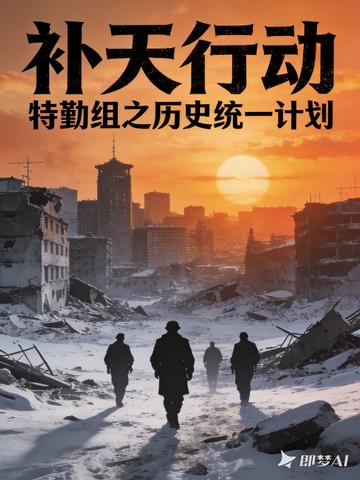
What regrets haunt China's dynasties? If history were changed, could those dynasties have endured, or even gained wider territories? Six college students, ten transmigrations, and an attempt to save China's mighty dynasties. From the chaos of rival states at the end of the Eastern Zhou to the tyrannical rule of Qin Er Shi in Xianyang; from the deadlock over reforms at the end of the Western Han to the heroes who rose amid the Three Kingdoms at the end of the Eastern Han; from the absurdity and ambition aboard Emperor Yang of Sui's dragon boat to the foundations already cracking beneath the Kaiyuan Golden Age of the Tang; from the tragic call to arms of Yue Fei's Northern Expedition in the Southern Song to the Mongol cavalry of the Yuan sweeping across Eurasia in clouds of dust; from the magnificent course of Zheng He's treasure ships cutting through the Indian Ocean to the dragon flag sinking beneath the waves of the Yellow Sea in the First Sino-Japanese War.
Ten historical turning points, ten transmigrations, ten attempts to change the course of events.
They succeeded, in certain details. They delayed a revolt, saved a city, gave a famous general a few more years to live, and turned a defeat into a costly victory. For a time, they even thought they could truly turn the tide of history.
But in the end, they all failed.
Not because they lacked ability or had bad luck, but because each time, they ran into an invisible wall: the laws of history. The inertia of institutions, human weakness, the stubbornness of vested interests, the constraints of geopolitics, the deep structure of cultural traditions... These forces formed an unseen web, binding fast anyone who tried to break free.





What a great imagination. If we could go back to the Han and Tang Dynasties, would China be able to dominate the world? It would really turn Europe into Loulan. There is a lot of in-depth thinking, one of the few things in Tomato that requires you to use your brain to read it.