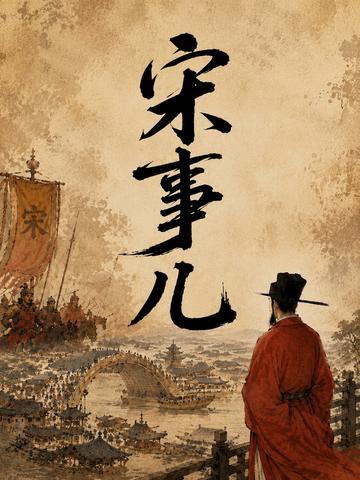
I love history too: the people and events of the past, and all the lessons to be learned from the long river of history. That is why we have the story of Wolong, who was imprisoned for using the past to criticize the present. But in reality, most people haven’t encountered enough history, so the same mistakes keep being made today.
I’ve been studying history since childhood, and now, after more than a decade of it and having entered the working world, I’m finally starting to write. I want to try to leave these words behind, writing the history of history.
This book largely takes things as they come, using historical sources as its foundation while adding my own writing style, analysis, and assessments of the institutions of the time.
The Song dynasty was a deeply contradictory era.
It was rich, so rich that its GDP once accounted for more than half of the world’s, and Kaifeng and Lin’an were the most prosperous megacities on Earth. It was weak, so weak that even a “county-level regime” like Western Xia could lord it over the Song, which ultimately fell to the Mongol cavalry. It was civilized, so civilized that even when civil officials pointed at the emperor and cursed him, he couldn’t strike back. It was also deeply humiliated, so humiliated that it had to buy peace with “annual tribute” and trade “vassalage” for survival.
But that was the Song dynasty as it really was.
This book begins in 960, on the morning at Chenqiao Post when a man was “forced” to don the imperial yellow robes, and follows events all the way to 1279, when the sea beyond Yashan swallowed a hundred thousand soldiers and civilians. Three hundred and nineteen years, eighteen emperors, and countless ruthless men, mighty men, madmen, and sages.
This is not a dry history textbook. There is no abstruse classical Chinese, no timeline that will put you to sleep, only vivid people, absurd or tragic events, and the complete story of an empire struggling onward through splendor and humiliation.