Pingjiang is a city under a curse.
Forty years ago, it was a coal city. Twenty years ago, it was a city drowning in debt. Ten years ago, it called itself a “city of the digital age.” Now, it is a heap of ruins.
Pingjiang’s curse is not that the coal ran out or that the debts could not be repaid. Its curse is this: every leader who takes charge wants to leave their name on the city, so each one carves another gash into it. Over forty years, the city has had one Party secretary after another. Pingjiang has not died, but neither is it alive.
This is not a story about one corrupt official or one upright official. It is the story of this city over forty years. It traces the city’s changing faces, from “coal city” to “city of debt,” then to “city of the digital age,” and finally to a “declining city.” At its heart is a resettlement building constructed over a mined-out area, from planning and construction to cracks, condemnation, and demolition: a span of forty-one years.
In the 1980s, the first generation of builders found coal here. In the 1990s, the second generation of speculators found money. In the 2000s, the third generation of dealmakers found a “model.” In the 2010s, the fourth generation of dreamers found nothing but a mess. The fate of each generation is like the mined-out ground beneath the city: you think the land under your feet is solid, but every inch of it is hollow underneath.
Then they began blaming one another. But none of them would admit that they, too, had once been the one wielding the knife.
The protagonist of this book is a city, and the people it has crushed beneath its wheels.
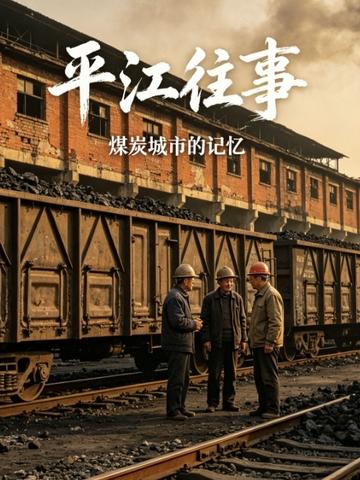
This is a solid work that makes people reluctant to fast forward one page. A resettlement house built on the goaf connects the rise and fall of Pingjiang from a "coal city" to a "sinking city" in the past 40 years. There is no absolute protagonist, only a group of figures that have been crushed by the times: the old director who signed a false report on the mine disaster, the female model worker who was bought out of her service, the developer who wrote "structural safety" on the cracked building... The fate of the four generations is like the slowly sinking land under their feet, with every inch of collapse silent and fatal. This is a coal mine version of "Alive", which reveals the hidden pain of individuals obscured by grand narratives in the transformation of resource-based cities. Five-star recommendation. After reading "The Past in Pingjiang", you will find that "Pingjiang" is by no means a fiction. It is the literary epitome of Fuxin, Hegang, Tongchuan, Gejiu, and those resource-exhausted cities across the country. When Cheng Fengnian signed a fake report on "workers' illegal operations", many mine accident investigation reports were lightly flipped over in reality; when Tang Guilan's underground service was not recognized, many old miners who had bought out their service were silent clutching their yellowed pay slips; when He Jiaming marked "Second to be determined", the slogans on the walls of many shantytowns faded from "keys delivered at the end of the year" to white paper. The dilapidated house in the book that was built on the goaf and had "Structural Safety" written on it is not a fictional fantasy. It is a quality problem of resettlement housing that has been exposed many times in reality. Forty years and three generations, from "digging coal for the country" to "being forgotten by the times", the author uses the cracks in a building to illuminate the structural pain of the entire era. This book is not a novel, but a local chronicle, an epitaph, and a heavy memorandum left to those who come after us. Five-star recommendation, to all those who live seriously in the subsidence area.