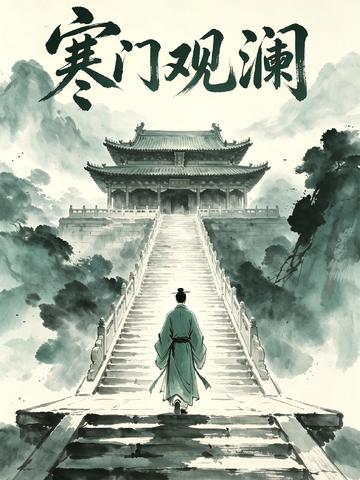
His father died on the riverbank. His mother coughed up blood without stopping, and his second uncle showed up at the door demanding repayment on a loan shark’s terms. Sixteen-year-old Shen Guanlan knelt before the coffin, clutching the last IOU his father had left behind
The year he was born, a wandering Daoist came to the village. After holding the baby and gazing at him by the stream for a long while, he said, “This child will gaze upon the waters and come to understand the world.” His father couldn’t read, but he kept the two characters “Guanlan” in his heart for sixteen years.
A transmigrated hydraulic engineer found himself trapped in a dynasty where studying was the only way to change one’s fate. While others crammed the Four Books and Five Classics for the imperial examinations, he wrote policy essays about water-control methods no one in the Great Zhou had ever seen.
He began by digging a small irrigation ditch at the entrance to his village. From there, his policy essays stunned the county school; he became the top candidate in the provincial exams, renowned across the provincial capital; and at the palace exam, the emperor asked him, “How would you govern the waterways and govern the country?”
“Water can carry a boat, but it can also capsize it. To control water, you must channel it, not block it. To govern a country, you must go with the people, not against them.”
Later, he took as his teacher a white-haired village elder who had spent forty years taking the examinations and was still only a licentiate. The old man bestowed one character upon him: Mingchuan.
“Gaze upon the waters and understand the currents. Use water management to serve all under heaven.”
This is the story of a farmer’s son who rose from the mud, holding a hoe in one hand and a brush in the other, and carved out a road to glory by sheer force of will.