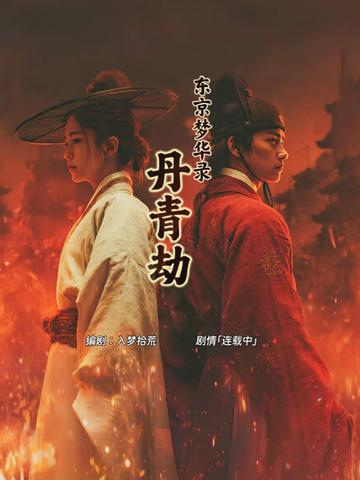
In the first year of Jingkang, Bianjing was prosperous. Zhao Shizun, who was waiting for an edict from the Academy of Painting, caught a glimpse of the cracks in the generals of the Song Dynasty in the ecstasy of "Tokyo Dream Records". He met Ah Ji, an orphan girl from the old party who had a blood feud. One used his pen as a knife to dissect the texture of this prosperous age; the other used his body as bait to sneak into the Jinren dark web. From the roasted pork skin at Zhouqiao Night Market to the shocking waves at the Jinming Pool and Water Palace, they used cinnabar and blood ink to outline a path of destruction on the scroll of "Along the River During the Qingming Festival". The mountains and rivers are hidden in the tea play, and life and death are calculated in the boundary drawing ruler. Zhao Shizun uses the most extreme aesthetics to plan the cruelest killing situation; Ah Ji, under the disguise of pearly dimples and faint eyebrows, struggles in the purgatory of family, country and personal hatred. This is not only a desperate dance between the orphans of the old party and the declining clan, but also the ultimate game of "reality". When the brush ignites the beacon fire, when the fine artist falls in love with the butcher's knife, is this Tokyo Dream that has been passed down through the ages an elegy or a memorial? He used a paintbrush to record the prosperous times, and she used fire to burn away the decay; when the scroll is unfolded, it is both a treasure map and a reminder.