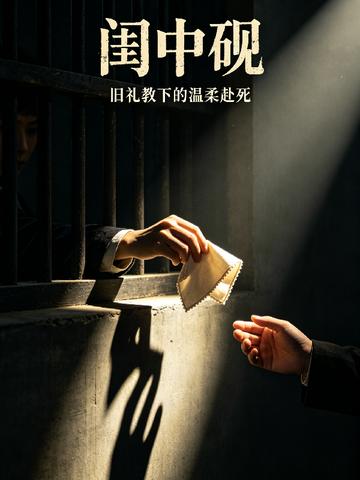
In the spring of 1926, Shen Zhigui, a young woman raised in a secluded household, first meets Lin Yanshu, newly returned from studying abroad, during her family's ancestral rites. One is confined by traditional propriety; the other embraces modern ideas. They bond over books and quietly fall in love. Shen Zhigui is forced into widowhood and then faces another arranged marriage. Lin Yanshu helps her enroll in a women's teacher-training preparatory program. They grow closer, but rumors force them apart. As the times grow turbulent, Lin Yanshu secretly joins a movement to educate ordinary people. Betrayed and arrested, Lin is rescued when Shen Zhigui sells her dowry and begs her brother on her knees. After escaping, Lin is forced to leave Jiangzhou. Shen Zhigui follows under the pretext of seeking medical treatment, and they enjoy a brief period of peace in the foreign concessions. During their final mission, Lin must transport supplies, and Shen Zhigui volunteers to use the Shen family's wharf as cover. The steward betrays them, and the military police launch a manhunt. Shen Zhigui draws the pursuers away and is captured. She refuses to give them information in prison and is secretly executed. Lin Yanshu survives and never marries. She founds a girls' school, raises a white cat, and spends the rest of her life with her embroidery and loquat tree, remembering only the one she loved.
[Safety and compliance statement]
This book strictly adheres to the following:
· ✅ No politically sensitive content (set in a fictional Republican-era China, with no real historical figures or events; politically neutral)
· ✅ No explicit or vulgar content (the romance is subtle and restrained, with no graphic depictions)
· ✅ No graphic violence or gore (no details of torture or slaughter)
· ✅ No negative messaging involving minors
· ✅ No plagiarism or infringement (all characters and plot elements are original)
· ✅ No feudal superstition
· ✅ The protagonists have sound values (they sacrifice for the greater good of their country and embody positive values for their era)