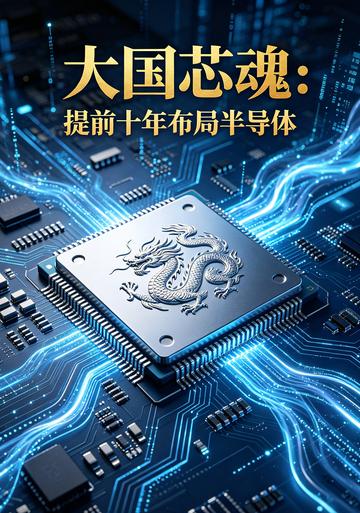
In his previous life, Lin Yuan watched helplessly as overseas giants strangled China's semiconductor industry. Lithography machine embargoes, patent blockades, and price wars: countless engineers poured their hearts and souls into their work, yet could never catch up. Then, in 2035, Changxin Technology collapsed under the final round of sanctions, and Lin Yuan died in an accident.
When he opened his eyes again, he was back in 2015. The national industrial guidance fund had yet to invest, and Xingdian Group had only just raised its cleaver. There was still time to change everything.
This time, he was no longer a bookish techie with his head buried in research. He avoided every major R&D pitfall with precision and planned ahead for each technological leap. He united domestic companies across the supply chain to build an unbreakable semiconductor industry. He recruited talent from around the world, bringing back to their homeland the Chinese people who would otherwise have been left overseas.
Some called him crazy, saying a college student had no business dreaming of making chips. Others called him a miser, because he even haggled over moving expenses. But the engineers who followed him knew that this man carried the future of China's entire semiconductor industry in his heart.
When domestically made DDR5 memory went into mass production, when China's own DUV lithography machine rolled off the production line, and when Xindong Technology became the world's leading memory chip manufacturer, Lin Yuan stood at the United Nations podium. He didn't make any grand declarations. He simply told the stories of three ordinary Chinese engineers.
That day, the whole world heard the sound of China's chips rising.