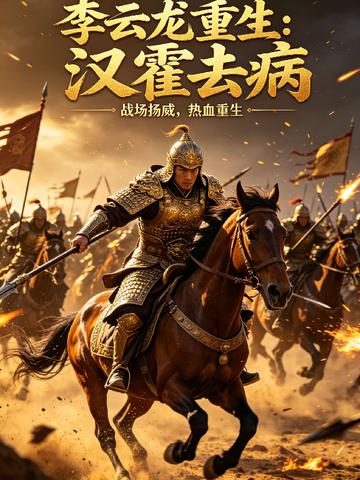
In the winter of 1968, Li Yunlong breathed his last on the hospital bed. The smoke cleared, but the loyal soul remained - when he opened his eyes, he turned into Huo Qubing, a young man from Chang'an City of the Han Dynasty.
The undercurrent in the court is turbulent, and the Huns' cavalry presses on the border. The former general looked at his fourteen-year-old body and silently accepted the jersey given by Emperor Wu of the Han Dynasty. This time, there are no artillery and machine guns, only longbows and swords; there is no Huaihai battlefield, only the vast desert.
But the soul of tactics never fades. While the Huns were still following ancient warfare methods, Huo Qubing had used lightning assaults and long-distance raids to turn the Qilian Mountains into discoloration. In the Hexi Corridor, he fought against five countries in six days and defeated the many with less; in the decisive battle in Mobei, he led his light cavalry straight into the enemy's rear and sealed the wolf as a surrogate.
Some people in the court were afraid that his great achievements would shock the emperor, so they set a trap secretly. But they didn't know that inside this boy lived a veteran who had seen the darkest and brightest aspects of human nature. In his eyes, power and intrigue are child's play, and life and death have long been indifferent to him.
What he wants is not to make a prince or a prime minister, but to plant the flag of the Han Dynasty all over the grassland so that future generations will no longer have to suffer from the iron hoof.
This is the resonance of two iron-blooded souls, and it is also the journey of a generation of military gods spanning thousands of years. When the lonely smoke in the desert was straight, the point he pointed at with his long sword was where the blood of the sons of the Han family had returned.