"Long Pass Road: Notes of a Postman"
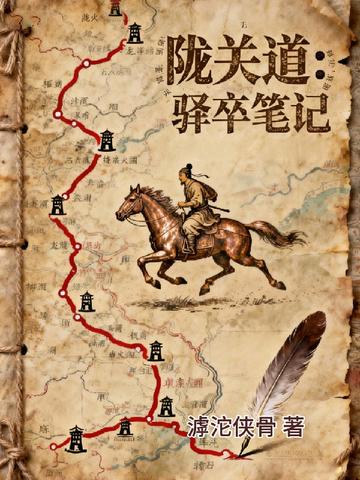
In the thirteenth year of Tianbao's reign, there was a heavy rain in Longshan. Shen Zhitu, a lowly postman in Pingliang Post, found a strange corpse wearing his father's straw sandals in the collapsed post warehouse. In his arms was the "Yuanhe County Map" that only nobles could possess. With the geographical memory of three generations of people exploring mountains and rivers, he saw through the systematic tampering of official maps - the mileage of thirty miles and one post concealed the deployment of troops, the number of horses corresponded to the transshipment of grain and grass, and the hydrological records were actually beacon signals. From Longguan Road to Chang'an City, from surveying and impersonating to fighting lies with his footsteps, a postman with little literacy used his bones to measure the true appearance of mountains and rivers obscured by power.
Reader comments
This work takes "the eyes of the lowest level to see the grandest mountains and rivers" as its core concept, and uses the knowledge-based suspense + micro-historical path verified in "The Surname Langya" to achieve differentiated competition in the "Mountains and Rivers Ancient Scrolls" track. The image of Shen Zhitu, an "illiterate but able to read the land" postman, is not only a subversion of the traditional "golden finger" model of time travel literature, but also a deep interpretation of the theme of "revitalization of ancient books" - what ancient books protect is not the study room of the elite, but the memories written by countless unknown people and the mountains and rivers.
This work takes "the eyes of the lowest level to see the grandest mountains and rivers" as its core concept, and uses the knowledge-based suspense + micro-historical path verified in "The Surname Langya" to achieve differentiated competition in the "Mountains and Rivers Ancient Scrolls" track. The image of Shen Zhitu, an "illiterate but able to read the land" postman, is not only a subversion of the traditional "golden finger" model of time travel literature, but also a deep interpretation of the theme of "revitalization of ancient books" - what ancient books protect is not the study room of the elite, but the memories written by countless unknown people and the mountains and rivers.