A unified empire is already too far away, and division, invasion, civil war, and a broken country seem to be the main theme of the moment.
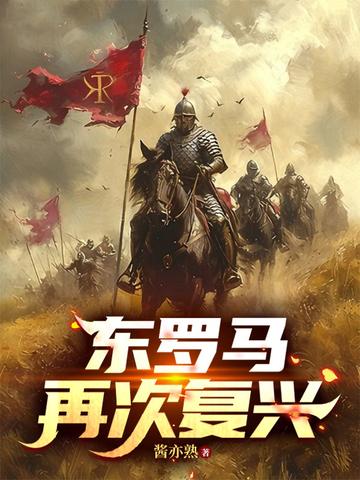
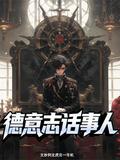
An empire, an emperor, and a code of law. These were the first words that the young officer Nikephoros Lykas learned after entering the palace military academy. He was willing to sacrifice everything for the cause of the unification of the empire, but he did not expect that personal changes would come so early.
This young officer, who was about to graduate, accidentally fell into a coma during a routine training. Fortunately, he was treated in time. After being in a coma for three days and three nights, he woke up...
Reader comments
The subject matter is relatively rare. This kind of foreign historical text in the Middle Ages, the closest text I have ever read is Kingdom of Nations. The difference is that there is a slight element of magic in that one.
Let's talk about the advantages first. Being able to write about this subject here is an advantage in itself, which shows that the author does not follow the crowd and wants to write something unique. Judging from the writing, the author's language style is also relatively simple, without any deliberate frivolity. Personally, I appreciate it.
Here are some comments for the author's reference.
First, the plot is peaceful. I am writing this review after reading Chapter 88 of the first volume. Overall, the plot seems a bit bland, with no obvious twists and turns. The plot advances quickly over time, basically: the protagonist graduates - the protagonist gets married - others get married - the protagonist fights - the protagonist wins... The narrative is straightforward and lacks exciting contradictions and conflicts.
Second, the character's personality has no characteristics. This one is actually somewhat similar to the previous one. When it comes to treating marriage, we can see that the author wanted to write about the ambivalence of the protagonist, but there was no way to portray it. It can be seen that the author wanted to write about a king with great talents and strategies, but he did not see any amazing actions and strategies in the king. I can see the queen's schemes and secret arrangements, but I only scratch the surface...
Plain and simple language style, magnificent plot development, and flesh-and-blood character creation. I believe that the author can better complete an epic work in this way. Come on, author
This is the first work I have seen that does not change history as a modern time traveler, but allows a person who belongs to this era to promote the revival of the empire through technology that was possible at the time but had not yet appeared. Very supportive
It's rare to see such a "don't rush to have fun" writing in historical texts. The author did not rely on golden fingers to reduce dimensionality, but devoted his writing to the "dirty work" of military reform, financial sorting, and diplomatic games - Greek fire, Pronian system, and Senate power struggle. Every stroke is supported by historical data. The protagonist is not the invincible Long Aotian, but with modern rationality, inch by inch in the quagmire of Byzantium: he must not only coax the nobles of Constantinople, but also guard against the swords of Venice, Saladin's soldiers, and the iron hooves of the Latin knights. Jingluo smiled knowingly after reading it. Even history fans can get a taste of the evolution of the system. This book is worth reading.
The writing is good. When I saw the emperor convening the Central Army and the military district troops, I was still lamenting that the Eastern Rome before the Battle of Manchikot was so skinny that a camel was bigger than a horse. I just couldn't figure out which Emperor Michael this was. He felt like Romanus II but not quite like him.
The writing is very good and the details are well handled. Unfortunately, I cannot accept that the protagonist's future career will be inherited by his adopted son. I wish the author will write better and better.
This book is quite good in terms of plot arrangement. The technology used by the protagonist is not too out of date, and the human touch is very strong and very comfortable to read. If it can maintain this level in the future, it will at least be an 85-point historical novel.
It's beautiful, everyone is well portrayed
High-quality Eastern Roman literature
Good-looking, good-looking, good-looking
It's very well written. The author must stick to it. I believe more and more people will read it in the future.
It's pretty cool, keep up the good work and keep updating.
Do you want to be the emperor in the future?
It's still good, compared to many novels about Rome.
Not bad, acceptable
Who is the emperor Michael?
The writing is very good, the details are well handled, and the sense of the times is strong. To be honest, I feel that it is more suitable to start from Qidian. The more realistic historical articles in Tomato are still too unpopular.
Come on, update slowly. Although it is relatively dull, it is not a big shortcoming. Don't stop updating it.
The subject matter is relatively rare. This kind of foreign historical text in the Middle Ages, the closest text I have ever read is Kingdom of Nations. The difference is that there is a slight element of magic in that one. Let's talk about the advantages first. Being able to write about this subject here is an advantage in itself, which shows that the author does not follow the crowd and wants to write something unique. Judging from the writing, the author's language style is also relatively simple, without any deliberate frivolity. Personally, I appreciate it. Here are some comments for the author's reference. First, the plot is peaceful. I am writing this review after reading Chapter 88 of the first volume. Overall, the plot seems a bit bland, with no obvious twists and turns. The plot advances quickly over time, basically: the protagonist graduates - the protagonist gets married - others get married - the protagonist fights - the protagonist wins... The narrative is straightforward and lacks exciting contradictions and conflicts. Second, the character's personality has no characteristics. This one is actually somewhat similar to the previous one. When it comes to treating marriage, we can see that the author wanted to write about the ambivalence of the protagonist, but there was no way to portray it. It can be seen that the author wanted to write about a king with great talents and strategies, but he did not see any amazing actions and strategies in the king. I can see the queen's schemes and secret arrangements, but I only scratch the surface... Plain and simple language style, magnificent plot development, and flesh-and-blood character creation. I believe that the author can better complete an epic work in this way. Come on, author
This is the first work I have seen that does not change history as a modern time traveler, but allows a person who belongs to this era to promote the revival of the empire through technology that was possible at the time but had not yet appeared. Very supportive
It's rare to see such a "don't rush to have fun" writing in historical texts. The author did not rely on golden fingers to reduce dimensionality, but devoted his writing to the "dirty work" of military reform, financial sorting, and diplomatic games - Greek fire, Pronian system, and Senate power struggle. Every stroke is supported by historical data. The protagonist is not the invincible Long Aotian, but with modern rationality, inch by inch in the quagmire of Byzantium: he must not only coax the nobles of Constantinople, but also guard against the swords of Venice, Saladin's soldiers, and the iron hooves of the Latin knights. Jingluo smiled knowingly after reading it. Even history fans can get a taste of the evolution of the system. This book is worth reading.
The writing is good. When I saw the emperor convening the Central Army and the military district troops, I was still lamenting that the Eastern Rome before the Battle of Manchikot was so skinny that a camel was bigger than a horse. I just couldn't figure out which Emperor Michael this was. He felt like Romanus II but not quite like him.
The writing is very good and the details are well handled. Unfortunately, I cannot accept that the protagonist's future career will be inherited by his adopted son. I wish the author will write better and better.
This book is quite good in terms of plot arrangement. The technology used by the protagonist is not too out of date, and the human touch is very strong and very comfortable to read. If it can maintain this level in the future, it will at least be an 85-point historical novel.
It's beautiful, everyone is well portrayed
High-quality Eastern Roman literature
Good-looking, good-looking, good-looking
It's very well written. The author must stick to it. I believe more and more people will read it in the future.
It's pretty cool, keep up the good work and keep updating.
Do you want to be the emperor in the future?
It's still good, compared to many novels about Rome.
Not bad, acceptable
Who is the emperor Michael?
The writing is very good, the details are well handled, and the sense of the times is strong. To be honest, I feel that it is more suitable to start from Qidian. The more realistic historical articles in Tomato are still too unpopular.
Come on, update slowly. Although it is relatively dull, it is not a big shortcoming. Don't stop updating it.
Will it be a single heroine?