He may have been the emperor with the humblest beginnings in history, born so low he was in the gutter, with nowhere to turn but death.
In 1344, a severe drought struck northern Huai, followed by locusts that blotted out the sun and then a plague that swept everything away. In just sixteen days, Zhu Chongba lost his father, elder brother, nephew, and mother to starvation. Those still alive could think only of escape, while the dead could not even afford a patch of earth to bury them. Desperate for a meal, he entered Huangjue Temple as a monk, imagining it would be a quiet refuge from the world. Instead, he found it was just another way of begging, with different clothes.
This book is no myth. It does not tell of Zhu Yuanzhang's miraculous birth or how he was born with stars beneath his feet. It tells only how a boy from the lowest rung of society, crushed beneath the weight of his age, picked up a blade amid mountains of corpses, and forced himself to stand in an era when people had to kneel just to survive.
From an ordinary infantryman among the rebel forces in Haozhou to the Prince of Wu in Yingtian, and finally to the Hongwu Emperor in the Hall of Supreme Harmony, it took him fifteen years. Across those years stood Chen Youliang, fierce as a tiger; Zhang Shicheng, cunning as a fox; and the Mongol Yuan cavalry, whose iron hooves left the Han people gasping beneath their weight. He won the toughest battles with the simplest tactics and eliminated the most dangerous enemies with the harshest decisions.
But securing the throne was the real purgatory.
The second half of the book reveals a far more complicated Zhu Yuanzhang. Like an indefatigable old ox, he treated memorials as fields to be worked, handling hundreds of matters of state each day. He personally set the salaries of officials and even dictated what trees commoners could plant in their courtyards and what colors they could wear. He killed Hu Weiyong and abolished the office of chancellor, which had endured for a thousand years, extending his power into every capillary of the empire. He paid officials miserly wages but punished corruption with extreme cruelty, flaying criminals and stuffing their skins with straw before displaying them outside government offices, so the next official to take up the post would feel a chill down his spine.
He loved the people like his own children because he had climbed out of the same mire they lived in. He killed without mercy because he had witnessed the deepest betrayals human beings could inflict. He was the most diligent ruler in Chinese history, and also its loneliest autocrat. He gave the Ming dynasty bones as hard as iron, but also infused them with the genes of suspicion and cruelty.
On the night Crown Prince Zhu Biao died, the sixty-four-year-old emperor, hardened by bloodshed, wept aloud like an ordinary father. No matter how many people he had killed, some abysses could never be filled.
The book features both the clash of arms on the battlefield and the cold calculations of power, but ultimately centers on a real, conflicted, complicated man. Read this novel and you will see how a beggar, starting from the most humble position in the worst of times, accomplished the greatest of feats: rebuilding the realm of the Han.
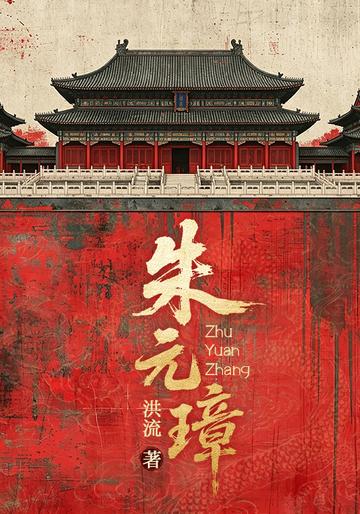

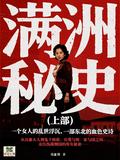


Born in a dusty world and suffering a miserable life, Zhu Yuanzhang struggled to survive in a troubled world where people were starving and dying, and climbed to the throne of the emperor step by step from a wandering monk and beggar. The book removes the legendary filter, faces his life of conquests, killings, and governance, analyzes his complex human nature that coexists with kindness and ruthlessness, and understands the loneliness and struggle of a generation of emperors.
Historical interpretation novel, not boring.
It's also okay. There is a complete set of textbooks on operation and saying goodbye, with reasonable structure and other features.
Good book, it's not easy for the author to write, please come on
Very good, worth a look
Very beautiful, very beautiful
La
A very good work