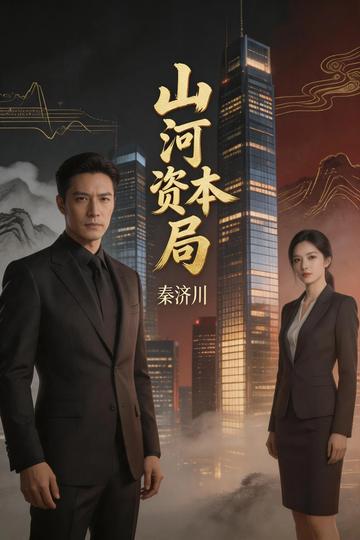
In the summer of 1998, in Huaqiangbei, Shenzhen, 19-year-old Lu Chengzhou had only two hundred yuan in his pocket.
Thirty years later, his name appeared at the top of the business empire - and from that day on, he never looked back.
From pirated discs to parallel-imported mobile phones, from the stalls in Huaqiangbei to the territory of Shenzhen-Hong Kong Trade City, Lu Chengzhou stepped on the gray area and worked his way up. But he soon discovered that there was a price tag behind every profit: his benefactor Lin Zhao trained him, but forced his father to death; his brother Zhou Tieshan stood in front of him, but was involved in the underworld vortex because of a woman; his allies turned against him at any time, and his opponents never showed mercy.
This is a story about grassroots rising from the bottom, and it is also a story about the cost. In the chess game where capital never sleeps, some people bet on the right times, while others are crushed by the times. The real winner is not the one who makes the most money - he is the one who remembers who he is amidst the torrent.
Spanning thirty years of Chinese business history, from housing reform to the AI wave, it is a long business epic about desire, ambition and bottom line.