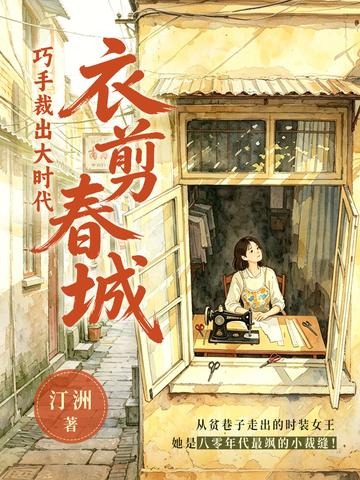
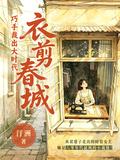
Clothes-Cut Spring City: Skillful Tailoring Creates a Great Era
衣剪春城:巧手裁出大时代
- Status
- Completed
- Source
- Fanqie
Stats
Tags
Synopsis
Reader comments
In booklists 62
Explore more →
The Three Views Are Extremely Upright, and I Read This Book with Reluctance.
Right or wrong is up to oneself, reputation or reputation is up to others, regardless of gain or loss. The full picture is unknown and no comment will be made. Don't talk about right and wrong unless you are a player in the game. There is nothing in this world that cannot be tolerated by heaven and earth. The same is true for races and the same is true for people. We know the things in the book, but we are just outsiders of the book.
The No. 1 Chronicle in Your Heart
The heroine is not a virgin, has no great relatives, is decisive in doing things, and is powerful and domineering. A girl-oriented modern romance.
High-Quality Chronicle That Really Amazes Me! !
Please Give Me a High-Scoring Chronological Essay. Don't Be Too Clever and Embarrassed.
I Only Recognize Chronological Literature! ! !
The First Ceiling of Chronological Literature! Yyds
The Top Chronological Ceiling Series, You Will Regret Not Watching It! ! !
Similar to Xia Xiaolan's book, I can't forget it for a long time after reading it.
Is There Any Chronicle That Is Low-Key and Does Not Downgrade Wisdom? the Kind Where You Eat and Drink Every Day Is Not Necessary.
Want to watch movies similar to "Helping Others?" It's better to fulfill yourself" book. Period novel, heroine, it doesn't matter whether she time travels or has a golden finger, she's not brainless, she's not too high-profile, what's most annoying is the kind of thing where people have to cook outside and have to cook outside every day even though there's space for people to enter.
Find a Job Based on Your Ability in a Historical Article
Is there any heroine in a period novel who is from the countryside, but the heroine works in a commune or department based on her own abilities? There is a shortage of books.
The Period Ceiling with Two or Three Brushes
Chronicles! Such a Beautiful One! There Can't Be Space, the Space Is Too Fake!
I don't know why I feel that chronicle novels are so good recently, especially those about time travel. It's okay to wear books and stuff. I read a book called Soft Rice Green Tea and I really liked it. It's very real. Unfortunately, it's still being updated. Do you Jimei guys have any more recommendations? It's okay to bring space supplies to the supermarket.
I've Recently Become Obsessed with Chronicle Literature! ! ! No Space Required! ! No Cheating!
The best ending. The writing is not new and the plot develops quickly.
It Doesn't Matter What the Subject Matter Is, Just Be Smart
Don't say much, just understand
Excellent Chronicle (Completed)
Strong women + strong men + abuse of scum + past and present life
A Period Novel in Which the Heroine Does Not Help the Poor, Does Not Have Multiple Children, Does Not Go to the Black Market, and Does Not Take over the Business.
The male and female protagonists have the right families. The female protagonist should not get married as soon as she time travels. The female protagonist's family should be harmonious and not favored by each other (grandparents, grandma, and uncles are not the best). The female protagonist can go to the countryside, but do not force the female protagonist to go to the countryside. In some stories, the heroine clearly does not need to go to the countryside and insists on the heroine going to th
The Top 1 Historical Novel in Your Mind
Please Provide a Normal Chronology!
Please provide a normal period text! Not bloody! No exaggeration! No love brain! Not silly and sweet!
Hardcore Lovers of Period Literature, I Beg You to Grab the Book at the Bottom of the Box
Looking for a High-Quality Novel Without Skipping a Chapter?
A bit high-sighted
Wen Jiazhi, from a Humble Family, and Then He Became the Best
Very Good Writing and High Quality
No limit to men and women, good writing
Is There Any Kind of Novel Where the Male Protagonist Is Gentle and Husbandly?
I want to see a male protagonist who has a gentle and polite personality but also likes a female protagonist who restrains his desires, or a male mother who loves to worry about the female protagonist (*^▽^*)
Looking for a New Way of Chronology
It's either a black market or people who are fed up with it.
Aboriginal literature of the era, no need to use books, no system, pure Aboriginal literature
The profoundness of this book lies in its understanding of the power of ordinary lives and its tribute to every ordinary person who lives a serious life. In the turbulent years, the people in Shiquan did not perform earth-shattering feats, but they resisted the hardships of life with kindness, tenacity, and warmth. Their stories tell us: The times may be turbulent, but ordinary glimmers of light are enough to illuminate the years; life may be full of thorns, but the warmth of the world is always worth cherishing. After closing the page, the smell of fireworks from Shiquan seems to still be lingering on the tip of my nose, and the figures of the teenagers are still clear. "Spring City with Clothes Cut" is not only a memory of the old days, but also a mirror that reflects human nature and warms people's hearts - years are hidden in an alley, spring and autumn are hidden in a seam of clothes, ordinary is immortal, and the world deserves to be treated with tenderness.
"Spring City with Clothes Cut" is the most delicate period novel I have ever read. The fireworks of the old city in the south of the Yangtze River come directly to your face! The various scenes of the neighborhoods in Shiquanli, the daily life in the old house, and the growth stories of the three children are all real and moving. He Yun's filial piety to his grandmother and his generosity to his friends, Fang Xun's protection of Ruan Luo and his forbearance in life, Ruan Luo's longing for her mother and love for costume design, each character has flesh and blood. The love between Ruan Shiying and Lin Yixiao is so heartbreaking. Their deep love for each other cannot withstand the tide of the times. In the end, people are separated forever, which makes people shed tears. Han Youxin's master-disciple relationship and mutual help between neighbors are warm and healing.
The most rare quality of this book is that it is objective and realistic. It does not deliberately exaggerate the sufferings or beautify the past, and faithfully shows the real life of the people in Jiangnan in the special era. There are dream chasers like Lin Yixiao who are trapped by the times, gentle and compassionate ordinary people like Ruan Shiying, and there are also narrow and selfish city women like Zhou Yuxia. The multifaceted human nature is portrayed in a complete and three-dimensional way. The growth line of the three teenagers healing each other is gentle and healing, neutralizing the depressing tone of the previous generation's story; friction and mutual help coexist in the old neighborhood, and the atmosphere is strong. The description of the old alleys in Jiangnan is full of atmosphere, the text is delicate and soft, the narrative rhythm is slow, and the details are full without watering down. Only by reading carefully can you feel the tenderness and regret hidden in the text.
This story really makes you calm down and read it slowly. The author's writing style is very good. Although the writing is a little slow, the details are very real and warm. While reading, I seemed to follow the author's footsteps and walk into an inconspicuous but full of fireworks alley in the Jiangnan Water Town. There are the mottled walls of the Fang family courtyard, the shouts from the neighbors, and the footsteps of teenagers running wantonly. The interweaving of the three character lines in the story is not complicated, but it is enough to outline the tenacity and tenderness of ordinary people in that era. Sensitive and sensible He Yun, Fang Xun who stutters but protects his sister, and Ruan Luo who has a rough life experience, they warm each other in turbulent times and use the most simple way to resist the hardships of fate. I couldn't help but laugh out loud when I read about Ruan Luo's cleverness and mischief when she secretly brewed sweet-scented osmanthus and engaged in "speculation." And when I saw Fang Xun being beaten to protect his sister and being obedient to her sister, and when Ruan Luo wandered alone in the night, I was hit by a sour feeling. What impressed me even more was the author's grasp of the "epic of little people". Clothes Cut Spring City is not a grand historical narrative, but a group portrait of life composed of a series of daily details: the sound of the shoe repairman's hammer at the alley, the soft words of Wu Nong, the proprietress of the grocery store, the fragrance of osmanthus wafting from the depths of the alley... These fragments are carefully picked up in the book and collaged into an ukiyo-e of the times. Does it make me feel more kind and warm? In difficult times, people can still keep each other alive with a bowl of hot soup, a joke, and a silent watch. Perhaps this is the belief that the author wants to convey: no matter how the times change, the kindness and resilience in human nature will never be extinguished. May we all be like the tenacious sweet-scented osmanthus in the alley, blooming our own old days in our respective "City of Clothes and Spring".
The main line of clothing design runs through the entire text, and the aesthetic description is delicate and moving. Fashion lovers will be immediately ecstatic! There are very few period articles that explore tailoring and fashion design as the core themes, and most of them just briefly touch on the plot of making clothes. This book connects the lives of two generations through fabric, tailoring, and cheongsam design, fully displaying the aesthetics of Chinese clothing. Lin Yixiao returned from studying in France and mastered Western three-dimensional tailoring. She also deeply loved the traditional Jiangnan cheongsam and wanted to combine the two styles to improve new garments. The book details her design ideas of hand-drawing paper, splicing silk, and improving collars and cuffs. The words and pictures are so strong that it makes you feel like you are witnessing the birth of exquisite clothing. The regretful portrayal of the design being unable to be implemented due to the limitations of the times is quite heartbreaking. Those design manuscripts hidden in the attic are her unfinished ideals throughout her life. Daughter Ruan Luo inherited her mother's talent. She collected scraps of fabric and sewed after imitating drawings since she was a child. Her growth path revolved around the dream of inheriting clothing. From learning needlework to independently designing and improving cheongsam, her growth trajectory was clear and complete. The details of old-fashioned sewing machines, various colored silk threads, embroidery patterns, and traditional buckles are described in detail, and the aesthetics of traditional Jiangnan clothing are fully presented. Clothing fans and Chinese style fans will especially like it.
This realistic Jiangnan novel is truly unique. It focuses on depicting the struggle and perseverance of small people in the current era, and deeply explores the multi-faceted nature of human nature, without one-sided definition of good or bad characters. The dual-line narrative design is ingenious. The middle-aged love line shows the regrets of the dream chaser and the lover, and the juvenile growth line tells the story of the mutual redemption of children who lack the warmth of family. The two clues are intertwined to advance the main line, with complete foreshadowing and tight echoes. Fang Xun's little stuttering character is particularly brilliant, with a weak appearance and a tough heart, silently protecting his friends; He Yun is precocious and transparent, gentle and considerate; Ruan Luo is soft but has a firm love in her heart, and her growth trajectory is clear and complete. The old-fashioned daily life objects and Jiangnan street environment are restored to reality, with a strong sense of substitution. The text is gentle and delicate, without the accumulation of gorgeous rhetoric. The plain narrative has the power to poke the heart. It is a must-read for lovers of slow-paced warmth.
It accurately captures the unique sensitive psychology of children from disabled families, and it is delicate and real without being suspended! Detailed description of the unique inner activities of three children who lack love: He Yun is habitually observant of others and does not dare to express his needs at will for fear of causing trouble to his grandmother; Fang Xun has low self-esteem due to his stutter and is afraid of speaking in public. After being bullied, he dare not take the initiative to complain and only tolerates it silently; Ruan Luo lacks maternal love and secretly feels disappointed when she sees other children getting along with their mother. She relies on fabrics to relieve her inner loneliness. The psychological portrayal of children's sensitivity, vulnerability, and desire for warmth is accurate and fully fits the true mood of single parents and orphaned children, and is delicate and heart-breaking.
Sisters who don't know what to read directly locked in this Jiangnan period novel. It perfectly avoids the blind spots such as brainless counterattacks and bloody love triangles. It focuses on the trivial daily life of ordinary people and depicts sincere and full emotions. Fang Xun has a poignant character who stutters, looks timid on the outside but is tough on the inside, and silently protects his friends; Ruan Luo inherits her mother's design dream, and is soft but firm; He Yun is precocious and gentle, and takes the initiative to take care of everyone around him. All the contradictions fit the background of the 1960s and 1970s, the logic is smooth and flawless, the dual-line narrative balances pathos and healing, and the foreshadowing is complete. The Jiangnan atmosphere is strong, the text and pictures are strong, and the plot is made up without adding water. Each chapter has effective highlights. It is highly recommended for lovers of realism and warmth.
There is no bloody sadomasochism, it is all about delicate warmth and growth. The story of three boys and girls is healing and heartbreaking. He Yun went from being lonely and lacking love to finding warmth in Shiquan; Fang Xun went from being humble and forbearing to learning to protect himself and his friends; Ruan Luo went from being ignorant and helpless to being strong and working hard to learn to make clothes. The growth of everyone is clearly visible. The love between Ruan Shiying and Lin Yixiao was difficult to overcome. The strong alliance between a designer studying in France and a military doctor was stymied by the times, and eventually the yin and yang were separated. Their dream of fashion design was finally passed on by Ruan Luo. It was so sad. The warmth between neighbors is so healing. Grandma Ning, Grandma Fang, and Meng Chunjiao, these kind old people, protect their three children and warm the whole Shiquanli. Zhou Yuxia's meanness and Zhang Jingmao's arrogance also make the story more realistic, with a sharp contrast between good and evil. The mist and rain in the south of the Yangtze River, the bluestones in the old alleys, and the osmanthus trees in the houses, the author writes so beautifully about the south of the Yangtze River
As a native of Jiangnan, the old streets, food, and old-fashioned living customs described in the book completely overlap with my childhood memories. The yellow croaker cart, sweet-scented osmanthus cake, pedal sewing machine, and bluestone alley instantly brought me back to the courtyard where my grandmother lived when I was a child, and I felt directly immersed in it. The relationship between the three children is extremely real. The children share, protect, and comfort without reservation, and are full of healing power without the complex calculations of adults. Ruan Shiying and Lin Yixiao have a soul-matching connection. They go in both directions but are separated by the times. The plain text narration is particularly tear-jerking. The story does not pursue fierce and bloody conflicts, but piece together a complete plot from daily life. All contradictions fit the historical background, and the logic is smooth and flawless. The text is warm and soothing, the pictures are full of sense, the narrative is water-free, and the details are full. It is suitable for reading slowly and calmly. Lovers of realistic period literature should not miss it.
I came across a recommendation by chance and fell in love with it. I thought it was an ordinary romance of the era, but I didn't expect that it combines multiple elements of the market, growth, and dream chasing, and the content is full and rich. The two-line narrative switches naturally. The tragic stories of the previous generation pave the way for the era, and the growth of the next generation of teenagers brings warmth and light. One sadness and one warmth are well balanced. The supporting characters all have independent personalities and are not tools to set off the protagonist. The portrayal of human nature is objective and true. The description of the old alleys in Jiangnan is full of atmosphere, the text is full of pictures, and the narrative has no unnecessary water. Each chapter advances the main line. Lovers of warmth should not miss it.
I read every update as soon as possible, reluctant to browse quickly for fear of missing the delicate and touching details. The most eye-catching setting in the book is that of the little stuttering Fang Xun, who is weak on the outside but tough on the inside, and the contrasting characters are particularly poignant for readers; He Yun is precocious and transparent, and can see through the warmth and coldness of people at a young age; Ruan Luo is soft but passionate, and sticks to her dream of fashion design. The stories of the previous generation are full of the helplessness of the times, dreamers are trapped in reality, and lovers are forced to separate; the children's plot dilutes depression, and the pure friendship of teenagers heals people's hearts. The details of the era are true, and the writing is exquisite. The more you read, the more you become addicted.
Yellow croaker carts, woolen sweaters, sewing machines, sugar osmanthus, every old object is full of a sense of age, instantly bringing people back to that simple and warm era. The various behaviors of the neighbors in Shiquanli are so realistic. There are the kind-hearted Grandma Fang and Grandma Ning, the mean Zhou Yuxia, and the gossipy neighbors. Everyone is like the people around them. The friendship between the three children, He Yun, Fang Xun, and Ruan Luo, is too pure. There is no intrigue, only mutual protection and warmth. The childhood interactions are sweet to the heart. Ruan Shiying's deep affection, Lin Yixiao's talent, the love tragedy of the two is so regrettable, and the helplessness of the times and personal struggles are vividly written. Fang Xun stutters and has low self-esteem, but he has the kindest heart. He doesn't complain when he is bullied and silently protects Ruan Luo. It's so heartbreaking. Ruan Luo inherited her mother's talent in fashion design, worked hard to learn the craft, and shouldered the burden of life at a young age. She is so sensible that it makes people feel sad. The writing is delicate and smooth, the plot is full of laughter and tears, and the atmosphere is full of atmosphere. Lovers of period literature should jump right in!
Compared with most period novels that only focus on the love between male and female protagonists and ignore the fireworks of the city, this book has just the right balance. Neighborhood trivia, children's growth, middle-aged love, and the inheritance of dreams are all taken into account, and each clue is completely described without being sloppy. The supporting characters are no longer tool men. The supporting characters such as Master Han and Grandma Fang have their own characteristics. They are both righteous and gentle. The scene where Master Han teaches Fang Xun self-defense is very refreshing to watch. Zhou Yuxia's badness stems from the poverty at the bottom, the character's logic is complete and not rigid, and the contrast between good and evil enriches the story. The description of the misty and rainy old alleys in Jiangnan is beautiful, and the text has a strong sense of picture.
A talented designer who returned from studying in France has nowhere to put his talents to use. He is trapped in the alleys of a small town and finally despairs, which is heart-wrenching to watch. Ruan Shiying's deep love is so heart-wrenching that he gives up his future for his wife, silently protects her, helps her realize her dream, and sacrifices in the end. He is a peerless good man. The friendship between the three children is so healing. They redeem each other who lack love. The warmth of childhood heals all the pain. It is so touching. Zhou Yuxia and her son are too irritating. They bully the weak and make people angry. The kindness of Han Youxin and Grandma Fang warms people's hearts. The writing is delicate and textured, the plot is heart-wrenching, and the sense of age is full.
In the fireworks alley in the old town of Tongshi, there are many people who live in fireworks. In the early 1960s, a drastic change in fate caused Ruan Luo to lose her parents at a young age and was forced to be adopted by her neighbor's Fang family. The Fang family is poor, and only Grandma Fang and her only grandson Fang Xun depend on each other. The arrival of Ruan Luo makes the lives of the three of them even poorer. The appearance of young He Yun shines like a ray of light into their difficult lives. Three unrelated young people formed a deep friendship in the turbulent years, and they also struggled to move forward in the tide of the times. Ruan Luo has a design dream in her heart. In order to support her family, she started from a small tailor shop and stitched her meager livelihood stitch by stitch; Fang Xun is the silent and protective brother who is willing to give up his future just to share the burden for Ruan Luo, starting from a street shop to a clothing factory; He Yun is a far-sighted and wise guide, shielding Ruan Luo from wind and rain, paving the way and building bridges, and finally gives up her iron job and joins the business world for her. From the bluestone road in Shiquanli, to the bright lights of Shanghai T-stage, to the glorious moments on the international stage - they have experienced family ties, slander, business secrets and emotional choices, growing up amidst misunderstandings and separations, and struggling in reform and opening up. This is not only an emotional story spanning half a life, but also a picture of the times flowing with the changes in China's textile industry. When personal dreams collide with family ties, and when the deep-seated love encounters the test of reality, three ordinary people use their tenacity to refuse to admit defeat and weave a legend that belongs to the strivers. Family feuds, business wars, emotional entanglements and the rise of the textile industry in a great country are intertwined, writing the youth, choices and glory of a generation.
I burst into tears when I saw the clip of Ruan Saiying collecting Lin Yixiao's design draft. The silent and tolerant affection is far more moving than the sweet words. The two have similar minds, but they can only live repressed in a small alley. They pursue their love and suffer criticism from others. The feeling of powerlessness brought by the times is overwhelming. Fortunately, the interaction between the three children is healing enough. Fang Xun and Guihuatang and He Yun resist the ridicule, and their tenderness and tenderness fill the depressing plot. The old neighborhood has a strong atmosphere of fireworks, a strong sense of immersion, the writing is delicate and gentle, and the plot is smooth and not draggy.
Anyone who hasn't watched "Spring City" will be sad, OK? This is definitely the literary ceiling of the era! The misty rain in the south of the Yangtze River, the alleys of the old city, and the neighborhoods are all full of atmosphere. When reading, it feels like being in Tongshi in the 1960s and 1970s. The suicidal melon at the beginning immediately catches the eye, and the story of the Ruan family is full of suspense. Lin Yixiao's identity, the reason for suicide, and Sheng Yumeng's secret, every foreshadowing makes people curious. He Yun is smart and sensible, Fang Xun is gentle and forbearing, Ruan Luo is strong and cute, the interaction between the three little protagonists is very loving, and the childhood line is so cute. Ruan Shiying is affectionate and great, and Lin Yixiao is proud and talented. Their love is the tragedy of the times, making people sad and loving at the same time.
Different from the clichéd and noisy mother-daughter, father-daughter relationships, the family relationships in the book are forbearing and restrained, and there is a lot of love hidden in ordinary daily life! Lin Yixiao didn't have many scenes with Ruan Luo when she was alive, but they relied on countless objects left in advance to achieve long-term maternal companionship. This silent maternal love is novel and tear-jerking. Ruan Shiying would never openly say that he loved his daughter. He would quietly collect beautiful scraps of fabric from neighbors, properly seal his wife's manuscripts, and silently support his daughter when she was bullied. The Chinese style of restrained fatherly love was extremely realistic, and he completely replicated the unspeakable and silent giving appearance of his father.
The three-dimensional family love of intergenerational warmth, mother-daughter bond, and silent father's love go hand in hand, and the three-dimensional depiction is not one-dimensional! In addition to the main line of family love between Ruan's father and daughter, there are many inter-generational relationships in the book that are particularly touching: Grandma Fang raised Fang Xun alone and devoted all her life to warm her grandson in her poor days; Grandma Ning had no children and gave her missing love to all the lonely children in the alley; Grandma He Yun was gentle and tolerant of him, who was dependent on others, and healed the child's trauma of losing his mother. Each family pattern is unique. There are mothers and daughters separated by life and death, fathers and daughters who are silent and tolerant, grandparents and grandchildren who stay together in poverty, gentle and tolerant elders across generations, all showing different forms of family love in an all-round way.
The most interesting Jiangnan period novel I have ever read! There is no exaggerated plot, but only a steady flow of warmth and regret. The story in Shiquanli is like a cup of tea, the more you taste it, the more delicious it becomes. He Yun, Fang Xun, and Ruan Luo, three children who lack love, save each other and warm each other. The childhood friendship is so pure! He Yun's filial piety to his grandmother and his generosity to his friends, Fang Xun's gentleness, forbearance and silent protection, Ruan Luo's strong, sensible and hard-working life, each character has flesh and blood. The love between Lin Yixiao and Ruan Shiying is so heart-wrenching that they go both ways but are trapped by the times. The love between a designer studying in France and a military doctor is romantic and tragic, and in the end, they are separated forever, which really hurts my heart. The gossips of the neighbors, the smoke and smoke of the old houses, and the misty alleys of Jiangnan, the author has welded the atmosphere of the times to death!
The words are like the flowing water of Tingjiang River, warm and long, perfectly combining the ingenuity of Hakka tailors with the changes of the times. There is no bloody conflict, but the fireworks in the world are connected with stitches and threads. It is full of healing and strength. I highly recommend it with five stars!
The sisters who didn't know what to read in the book shortage directly focused on this Jiangnan period novel, completely avoiding the highlight of the assembly line cool novel. The story focuses on the trivial daily life of ordinary people. Love, family affection, neighborliness, and youth friendship are sincerely depicted. There are no extreme bloody conflicts. All conflicts fit the background of the era and are logically smooth. Fang Xun's stuttering character is heart-breaking, timid on the outside and tough on the inside; Ruan Luo inherits her mother's design dream, soft but firm; He Yun is precocious and gentle, and takes the initiative to protect his friends. The Jiangnan atmosphere is strong, the writing is delicate, there is no watery plot, and every chapter has something to watch.
The article completely avoids all the pitfalls of the assembly-line era. There is no sudden rich counterattack, no brainless golden fingers, and no bloody love triangle. It relies purely on the daily life of the market and the delicate characters to impress the readers. The text has a strong visual sense, the narrative is smooth and soothing, and has great staying power.
I was just reading it to pass the time, but ended up falling directly into the story of Jiangnan Alley. The most rare thing about this book is that all the supporting characters stand up and are not just tools to complement the protagonist. The soft-hearted and kind-hearted Grandma Fang, the gossipy but good-natured Grandma Ning, and the mean and selfish Zhou Yuxia mother and son, the good and evil are all portrayed very realistically. In reality, there are indeed such neighbors who bully the weak and fear the strong. The childhoods of the three young protagonists are so distressing. He Yun lost his mother when he was young and stayed at his grandmother's house, and he learned to observe people's emotions at a young age; Fang Xun's parents died early, and he was born with low self-esteem and stuttering, and was bullied by children of the same age all year round; Ruan Luo lacked the company of her mother since she was a child, and could only rely on the design manuscripts left by her mother to express her thoughts. Fortunately, the three children rely on each other, and the pure friendship of teenagers heals the pain caused by their respective families of origin. The text and picture are very strong, with misty bluestones, osmanthus trees on the courtyard walls, and a sense of Jiangnan atmosphere. The plot is relaxed and moderate, and the sad points and healing points are well interspersed. It does not forcefully sensationalize but always touches the soft parts of the heart.
The opening chapter is full of suspense. Something happened to the Ruan family that caused a storm in the city. Lin Yixiao's suicide, Sheng Yumeng's secret, Ruan Shiying's choice, every point makes people curious. He Yun's loneliness when he first arrived in Jiangnan and the pain of losing his mother were so sympathetically written that he instantly became the character. Fang Xun's little stutter is set up to poke people, he is kind and forbearing, he does not resist when bullied by Zhang Jingmao, but he will stand up for his friends, the brotherhood is so touching. Ruan Luo lacked parental care since she was a child, but she is still kind and sensible. She grew up with Grandma Fang and worked hard to live a good life. She is so cute. Ruan Saiying is really a perfect man. He is deeply affectionate to his wife, responsible for his daughter, enthusiastic about his neighbors, and he is so sad that he sacrifices in the end. Lin Yixiao's tragedy is such a pity. The talented designer was buried, and his talents had no place to display. In the end, he died in despair, which was heartbreaking to watch. The warmth between neighbors, the fireworks of old houses, and the misty alleys of Jiangnan, the author writes so beautifully, the writing is superb, the plot is heart-wrenching, five-star Amway!
Suitable for bookworms who prefer realistic period novels and dislike time-travel and rebirth golden finger novels! There is no cheating, no rebirth, and no space. It is completely based on the real historical background of the 1960s and 1970s. The details of the era are rigorously researched, and the fate of the characters fits the historical environment. It is realistic and rich. For readers who are tired of the assembly-line time-traveling novels and want to read stories about ordinary people with historical depth, this book is perfect!
There is no suspended counterattack plot, but it honestly tells the joys and sorrows of ordinary people in the old alleys of Jiangnan for half their lives, and the emotional portrayal is sincere and delicate. The book objectively shows the multi-faceted nature of human nature. The mean-spirited city woman hides her existential embarrassment in her heart, while the ordinary neighbor retains goodwill in her heart. Each character is three-dimensional and vivid, with complete behavioral logic. The two-line narrative balances sadness and warmth. The regrets of the previous generation set off the hopes of the next generation. The foreshadowing of Ruan Luo inheriting her mother's dream of fashion design runs throughout the text, and there are surprises everywhere in the reading. Fang Xun, He Yun, and Ruan Luo, three love-starved teenagers, accompany each other, and their pure friendship dilutes the depression of the plot; Ruan Shiying is gentle and compassionate, and Lin Yixiao is unwilling to despair, and the love between the two is difficult to overcome. The details of old-fashioned life are well researched, the atmosphere of misty rain in the south of the Yangtze River is full, the writing style is soft and not exaggerated, and it is full of stamina.
The psychological description is suitable for age and identity, and the inner thoughts of children, young people, and middle-aged people are clearly distinguished! Children's minds are simple and pure, and their worries only come from bullying, lack of companionship, and favorite fabrics; teenagers begin to have ideals, confusion, and expectations for the future; middle-aged people are burdened with family and the pressure of the times, and their hearts are full of compromise, regret, and forbearance. The psychological activities of characters of different ages are completely consistent with their experiences. There will be no bugs like children's overly mature ideas and adults' naive and divided hearts. The character creation is rigorous and real.
Each protagonist's heart will continue to change with time and experience: Fang Xun went from feeling inferior and cowardly, and blindly tolerant, to becoming brave and confident with the encouragement of friends and masters; He Yun went from being sensitive and gloomy after losing his mother, to becoming cheerful and responsible with the company of his friends; Ruan Luo went from being timid and introverted, immersed in the sadness of losing her mother, to finding a love for fashion design and becoming tough and transparent. Psychological changes are gradual, and each change in mood corresponds to a specific experience. There will be no sudden changes, and the character's inner growth is logically consistent.