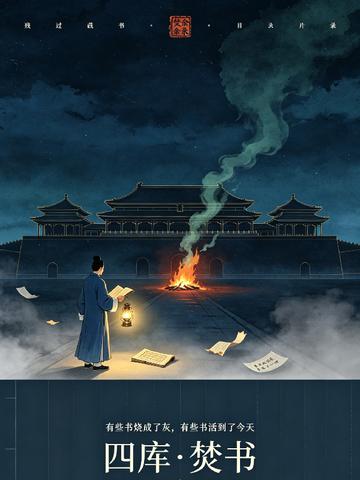
In the thirty-eighth year of Qianlong's reign, Sikuquan Library was opened to collect books. Chen Ke, editor of the Hanlin Academy, woke up from a bookshelf collapse, only to find that the original owner of the body was being transferred to Siku Hall, and his soul came from three hundred years in the future - an ancient book scholar who knew that behind this grand feat of "recording ancient and right texts", 700,000 volumes of classics would be burned and banned.
Faced with a wall full of rare books from the Song and Yuan Dynasties that were about to be deleted, Chen Ke made a choice: to be the most dangerous saboteur within the empire's largest cultural project. He used the loophole of yellow and white signatures to exchange banned books, and mixed the original copies with waste paper and transported them out of the palace. After the incident was revealed, he was sent to the northwest military station, but he discovered the Tang Dynasty Buddhist Scripture Cave in the Huoshaogou deep in the Gobi. From then on, an exiled prisoner and a group of border officers, monks, and book collectors started a secret contest between the desert and the temple that lasted for decades.
From the oil lamps in the Siku Museum to the cellars in the Gobi Desert, from the quicksands of the Mogao Grottoes to the secret rooms of the libraries in Jiangnan, the rescued classics flow quietly like underground rivers. When He Xin, who was investigating the case, rose to the rank of Minister of Military Aircraft, Chen Ke always stood between him and those priceless treasures - this was his own war, and it was also the long resistance of the fire of civilization in front of the book burning furnace.