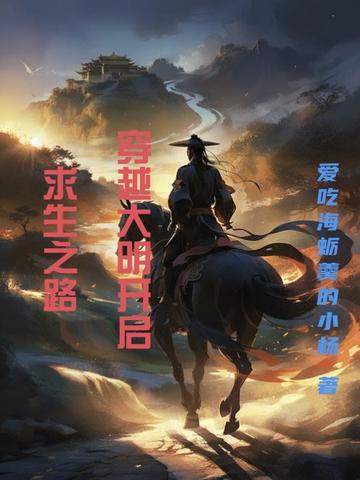
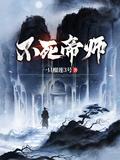
A social beast in the 21st century died suddenly just after working overtime. When he woke up, he found that he was dressed as an unknown little eunuch next to Zhu Yuanzhang.
· Started his own way of survival.
Reader comments
"Traveling through the Ming Dynasty to Start the Road to Survival" - a gentle fable about "setting rules"
After reading this work, which started from "Traveling through the Small Theater in the Early Ming Dynasty" and eventually extended to nearly 200,000 words, my most direct feeling is that it wrote the most "cool" story in the least "cool" way.
It is said that it is not a "splendid novel" because from the beginning to the end, the protagonist Li Xiaobai did not invent gunpowder, copy poems to become famous, participate in the fight for the heir, or open a harem. He only has two "golden fingers": one is the basic logical literacy of modern people - focusing on evidence, data and systems in everything; the other is the conscience of a normal person who has not been alienated by the bureaucracy. He can memorize the "Laws of the Ming Dynasty" and make forms. He knows that "segmented loss calculation" is more reasonable than "one size fits all", and he understands that "only businessmen dare to bet their wealth on reasonable rules." These things were basic skills in the workplace in the 21st century, but in the 25th year of Hongwu, they had become levers that leveraged the entire water transportation system.
It is called "refreshing" because the author uses an extremely solid writing style to write about the "system design" itself. When Li Xiaobai told Hui merchants at the Taiping Mansion pier that "the rules are not unilaterally set by the Yamen, they are negotiated together by everyone"; when he added the food shortage list at the station along the way to the household fixed amount bank one by one; when he copied the last private food account book on the snowy night of killing Hukou - what the reader gets is not the pleasure of upgrading and fighting monsters, but a deeper satisfaction: seeing a system slowly but firmly move an inch from "rule by man" to "rule by law".
This is the core theme of the book: how rules are established.
Everything Li Xiaobai did, in the final analysis, was only one thing: turning "routines" into "conventions." The food for the post station cannot be collected by the post chief himself, and the fixed amount of silver must be written into the provisions; the loss of border grain cannot be pushed to the merchants every time, and the responsibilities must be divided into sections and the compensation must be clearly defined; the loopholes in the change of taxation cannot be filled with treasure money, and physical settlement must be restored. These systems that seem to be taken for granted today would cost lives in the Hongwu Dynasty. There is a sentence that appears repeatedly in the book - "How much you make depends on your ability, how much you lose depends on the rules." This was said by Wu Liang, and later became Li Xiaobai's life creed and the highlight of the entire work.
This line of "setting rules" extends from Changyingcang in Huai'an to the Xuande period. But the rules are not just cold regulations, but also the people who live behind the regulations and their successors.
The most moving thing about this work is precisely that it depicts those "people protected by the rules" - or in other words, those who have not been forgotten.
The blind old postmaster of Huangchi Post Office clutched the sesame cake given by Li Xiaobai all night without letting go; the boy who wrote on the ground with a branch at the gate of Anping Post Station in Dongping Prefecture later entered the county school and became the head of the household department in Nanjing; the widowed postmaster of Yanmen Post Station The Cheng woman embroidered a flower that no one could see in the interlayer of the insole; Datong veteran Tian Si used a cracked tile knife to carve Sun Youfu's name on the Great Wall bricks, and also carved the inscription "The first joint transportation of grain to Taiyuan in the winter of the 25th year of Hongwu." These people are not tools to promote the development of the plot. They are the plot themselves and are the true background of the Ming Dynasty. At the end of his life, Li Xiaobai sealed these records together with his own memories into a wooden box and passed them on to the next generation. And the next generation, his daughter Sui'er, became a girl during the Xuande period who could memorize the regulations of the Association Movement Law and press her own fingerprints on the sealing mud. That scene is the gentlest relay in the entire work: one generation has paved the way, and the next generation continues.

"Traveling through the Ming Dynasty to Start the Road to Survival" - a gentle fable about "setting rules" After reading this work, which started from "Traveling through the Small Theater in the Early Ming Dynasty" and eventually extended to nearly 200,000 words, my most direct feeling is that it wrote the most "cool" story in the least "cool" way. It is said that it is not a "splendid novel" because from the beginning to the end, the protagonist Li Xiaobai did not invent gunpowder, copy poems to become famous, participate in the fight for the heir, or open a harem. He only has two "golden fingers": one is the basic logical literacy of modern people - focusing on evidence, data and systems in everything; the other is the conscience of a normal person who has not been alienated by the bureaucracy. He can memorize the "Laws of the Ming Dynasty" and make forms. He knows that "segmented loss calculation" is more reasonable than "one size fits all", and he understands that "only businessmen dare to bet their wealth on reasonable rules." These things were basic skills in the workplace in the 21st century, but in the 25th year of Hongwu, they had become levers that leveraged the entire water transportation system. It is called "refreshing" because the author uses an extremely solid writing style to write about the "system design" itself. When Li Xiaobai told Hui merchants at the Taiping Mansion pier that "the rules are not unilaterally set by the Yamen, they are negotiated together by everyone"; when he added the food shortage list at the station along the way to the household fixed amount bank one by one; when he copied the last private food account book on the snowy night of killing Hukou - what the reader gets is not the pleasure of upgrading and fighting monsters, but a deeper satisfaction: seeing a system slowly but firmly move an inch from "rule by man" to "rule by law". This is the core theme of the book: how rules are established. Everything Li Xiaobai did, in the final analysis, was only one thing: turning "routines" into "conventions." The food for the post station cannot be collected by the post chief himself, and the fixed amount of silver must be written into the provisions; the loss of border grain cannot be pushed to the merchants every time, and the responsibilities must be divided into sections and the compensation must be clearly defined; the loopholes in the change of taxation cannot be filled with treasure money, and physical settlement must be restored. These systems that seem to be taken for granted today would cost lives in the Hongwu Dynasty. There is a sentence that appears repeatedly in the book - "How much you make depends on your ability, how much you lose depends on the rules." This was said by Wu Liang, and later became Li Xiaobai's life creed and the highlight of the entire work. This line of "setting rules" extends from Changyingcang in Huai'an to the Xuande period. But the rules are not just cold regulations, but also the people who live behind the regulations and their successors. The most moving thing about this work is precisely that it depicts those "people protected by the rules" - or in other words, those who have not been forgotten. The blind old postmaster of Huangchi Post Office clutched the sesame cake given by Li Xiaobai all night without letting go; the boy who wrote on the ground with a branch at the gate of Anping Post Station in Dongping Prefecture later entered the county school and became the head of the household department in Nanjing; the widowed postmaster of Yanmen Post Station The Cheng woman embroidered a flower that no one could see in the interlayer of the insole; Datong veteran Tian Si used a cracked tile knife to carve Sun Youfu's name on the Great Wall bricks, and also carved the inscription "The first joint transportation of grain to Taiyuan in the winter of the 25th year of Hongwu." These people are not tools to promote the development of the plot. They are the plot themselves and are the true background of the Ming Dynasty. At the end of his life, Li Xiaobai sealed these records together with his own memories into a wooden box and passed them on to the next generation. And the next generation, his daughter Sui'er, became a girl during the Xuande period who could memorize the regulations of the Association Movement Law and press her own fingerprints on the sealing mud. That scene is the gentlest relay in the entire work: one generation has paved the way, and the next generation continues.