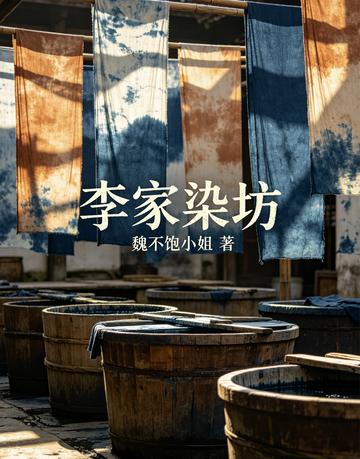
In the fifty-eighth year of the Qianlong reign of the Qing Dynasty, the Cui family dyeing shop in Tongxiang. Li Deming, who was born in poverty, got married as his son-in-law and received a lot of cold treatment. However, with a pair of bad hands soaked in indigo, he dyed the long-lost "moonlight white" under the moonlight where Zi Shi and Chou Shi met. Mr. Cui solemnly entrusted the family business, and Li Deming established three iron rules - it is better to spend a lot of money on material than to get an inch of fake money.
Since then, a small dyeing shop has experienced ups and downs in the tide of the times. The impact of foreign cloth, raging wars, internal strife within the family, threats from foreign enemies... In the past two hundred years, the six generations of the Li family dye house have experienced prosperity and dust, separation and reunion. Before the Japanese bayonet, the old Li Deming sealed the dye vat with his own hands: "I will not dye an inch of cloth for the Japanese." During the turbulent years, descendants hid the ancestral "sincerity" cloth in the wall to protect the last dignity of the family.
From the small courtyard in the south of the Yangtze River with blue bricks and black tiles, to the peril of the nation in the flames of war, and then to the rebirth after the reform and opening up, this piece of blue calico has witnessed the joys and sorrows of six generations. Today, this century-old dyeing house has become a local cultural landmark, silently telling that the simplest beliefs can often travel through the longest time. And the ancestral motto "If the heart is not sincere, the color is not correct" is still engraved in the bones of every generation of the Li family.