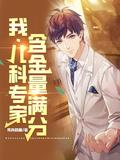
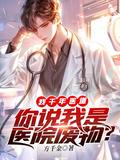
Su Yan, a 5+3 clinical medical student with no background, no resources, and no need to rely on shortcuts, had her medical records completely criticized during her fifth year of internship. Late at night, a future AI named "Mirror" silently emerged - it showed people with small gray characters and did not diagnose diseases, but only supplemented the boundaries of judgment.
From the third reading method of literature to the quality control of medical records, from the first meager income from knowledge services to the gradual formation of high-performance computers, dual-screen monitors, and private scientific research spaces—three years of training, Su Yan accumulated one piece of equipment after another, and gained confidence inch by inch.
However, the real mission of the mirror goes far beyond that: to trace the hidden diagnosis and treatment deviations in 1,247 medical records, to locate the tampered diagnostic standards, and to trace how the data from a single center was extrapolated into national guidelines. When all six deviation models are closed, the mirror turns to read-only, leaving the last words: "Goodbye, the observed."
Su Yan folded the note paper into three folds, put it in the left pocket of his white coat, and stuck it together with the shield badge. On the night when the top magazine received the notice, he sat at his desk by the window and wrote an extra line in his notebook: The person being observed is no longer the receptor, the person being observed has become the gatekeeper.
It is a medical coming-of-age novel with hard-core clinical details to the extrapolation deviation of the liver puncture complication rate, and narrative restraint to the point where every heartbeat is contained within the frequency of the radial artery. There are zero waste words, zero suspension, only medical records, data, and a person who knows the right direction and never looks back.
Reader comments
Let me talk about the conclusion first. This book is highly recommended. From the perspective of a graduate student, the author writes about how a doctor gradually grows from a medical student to a doctor, what he goes through in the process, how to make progress, how to improve, etc. The book involves a lot of professional knowledge, and it can be seen that the author must have experienced it personally. The current work mainly focuses on the growth of the protagonist, with various clinical cases interspersed in the middle. It is very fascinating to read one chapter after another. The writing style is also very good, and the reading experience is very good. Overall a great piece about medical students! Hope there will be more updates.
Is this the romance of medical students? So beautiful

Let me talk about the conclusion first. This book is highly recommended. From the perspective of a graduate student, the author writes about how a doctor gradually grows from a medical student to a doctor, what he goes through in the process, how to make progress, how to improve, etc. The book involves a lot of professional knowledge, and it can be seen that the author must have experienced it personally. The current work mainly focuses on the growth of the protagonist, with various clinical cases interspersed in the middle. It is very fascinating to read one chapter after another. The writing style is also very good, and the reading experience is very good. Overall a great piece about medical students! Hope there will be more updates.
Is this the romance of medical students? So beautiful