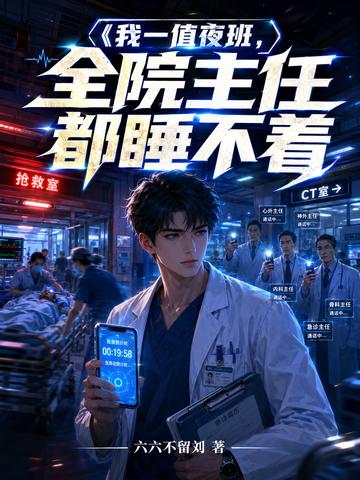
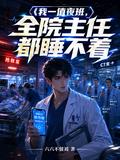
When I'm on Night Shift, All the Directors in the Hospital Can't Sleep.
我一值夜班,全院主任都睡不着
- Status
- Ongoing
- Length
- 710k Words
- Genre
- Urban
- Subgenre
- Urban High-Concept
- Audience
- Male
- Updated
- 11h ago
- Source
- Fanqie
Stats
130.9kReads
7.5Score
22.2kShelves
282Chapters
19.7kListens
1.6MReads · all time
Tags
Synopsis
Reader comments
In booklists 4
Traveling Through Emergency Department + Doctor + System
Traveling through emergency department + doctor + system
83.6MViews109Books2dUpdated
Do you have any medical articles? ! ! Emergency doctor kind of thing! ! ⭐The most important thing is that there is no CP! ! ! !
16.9MViews95Books1dUpdated
Doctors, Treating Illnesses and Saving People in an Ordinary Way, No Pretense or Slap in the Face
So far I have watched Yun Heng and Fang Han
15.7MViews176Books7dUpdated
Please, a Novel with Strong Medical Expertise, Not Just One with High Medical Skills!
Medicine is highly professional, and it is not the kind of surgery that can bring the dead back to life with just a few injections!
7.9MViews189Books1dUpdated
I feel comfortable watching it. It is real, objective, and IQ is online. Most of the medical literature is about doctors who are interns, trained, or appointed to ignore the regulations and directly perform rescue or surgery in emergencies. Either a chest opening or a major heart surgery. Then there was no one in the whole hospital, and a department came out and said that the protagonist violated the rules and that this was against the rules. Many regulations may seem unkind, but they are actually lessons learned at the cost of life. You can scold the hospital for not being a good person, you can scold the doctor for being unskilled, and you can scold the medical fee for being high. However, you cannot criticize the doctor for not being a good person and only writing out examination orders. Because every seemingly inconspicuous inspection is a key indicator that can help you at critical moments.
This is a very good medical emergency novel. The author is quite familiar with this aspect. There are some differences between individual hospitals. The overall difference is not big and it is quite real. I even guessed that the author has worked in a similar position. His works are very common, but they are more ordinary and everyday. If you like to read a little extraordinary type of books, you can read it. I quit, and the emergency department has achieved zero misdiagnosis, which is great, and it can be considered cheating. However, there are no first aid prompts in reality, and there will never be fewer people dying at the emergency door every year. This shows that the author is very kind-hearted, and there are not many good people. I think I can fully support this kind author. Dear book friends, what do you think?
People who watched it had a lot of feelings, and it felt quite professional. The directors of each department were also very responsible and did not blur the responsibilities between the doctors for the sake of fun. The protagonist's superiors are also great. Cheers, author [Like][Like][Like]
This medical article really breaks away from the traditional routine. There is no protagonist who highlights the story all the way, and it is rooted in the real daily life of emergency medicine. Staying up late, high-risk warnings, department games, and the tension of life and death are all coming. The group portraits are particularly brilliant. Everyone has their own position and helplessness. It is not forced to be sensational, but every word is heartfelt. The more you read, the more you can feel the difficulty of frontline medical care. It is worth savoring.
It is very professional. I feel that the author is very skilled and he should be a medical professional. When reading, I will make up my mind and make judgments. I feel that either I cannot understand many professional terms related to medicine, or I feel that the patients are not unreasonable enough (personal experience [laughing and crying])
The content is great, but the AI traces are too heavy. It is recommended to do more structural optimization to reduce repeated character behaviors and logical conflicts.
The writing is very good, but it is too tiring to read. The protagonist has never been off work, and the readers will be very tired after taking the role. There are no surgeries and no brainless skills. The biggest bug is that people do not die in the emergency room. Too many people die in the emergency room every year. This system doesn't seem to have much effect, but in fact, the emergency room is invincible.
It's very AI, but it's well adjusted. It's basically the daily routine of the emergency department. The golden finger is very strong, but the directors of the emergency department and other departments didn't directly treat the male protagonist as a god. They raised the problem immediately and slowly filled in the details of the various emergency procedures. While making the entire department run more smoothly, it also reduced the possibility of the protagonist being held accountable in various ways. Overall it looks very real.
First of all, the plot is compact. The author has a certain degree of professionalism in medical emergency knowledge and medical judgment. The characterization of each character is very good, and the atmosphere of the characters in the department is quite well grasped and fascinating. I highly recommend it to book lovers who are short of books. It is a rare and good book.
After reading Chapter 35, I will record it first. Very nice 1. Treating patients gives me a sense of immersion, and I can feel the urgency and importance of first aid. The responsibilities and pressures I bear are too great, and it is really hard. 2. The writing is very professional. At least I, a non-industry person, can enjoy it. The plot is exciting and realistic, which is very good. 3. The system is not a complete takeover and full spoiler. The protagonist is told the time of the illness and the basis for judgment at the beginning, and then guides the protagonist to grow up little by little, which is very good. 4. The only bad thing is that I feel that the protagonist is too tired. Except for the fact that he worked the night shift and caught up on five hours of sleep at the beginning, he is always at work and has no idea when he will take a break. It feels like the last night shift happened to be the second night shift, and there is no sense of the passage of time between the day shift and the night shift or the vacation. Overall good reviews, very nice. I stayed up late to read Chapter 73. It was very interesting and well-written, but I still felt that the protagonist was too tired, and the bystanders felt tired. The doctor was even more miserable than I thought. After the night shift, I slept in the duty room, and got up after four or five hours of sleep to continue working. It was completely nuclear powered. When I read this novel during the day at work, I feel like I'm working overtime. When I stay up late to read this novel, I feel like I'm on the night shift. It's so tiring. The author's writing style is very good and the pace is tight, but it seems that he doesn't care about the protagonist's awesomeness and fun. He is really tired from work [face covering]
The author's medical knowledge is very reliable. He is either a professional or he has put in real effort. His writing style is also very good. He is competent and not procrastinating. I don't know why the rating is so low, only 7.5. I think 10 points is not an exaggeration.
It can be seen that the author has a medical background, and the text is concise and clear. Although there are many professional terms, it is gripping and makes people want to read more. Like it very much👍🏽👍🏽👍🏽
The structure is very stable, not only about treating diseases and saving people, but also about systems, responsibilities and perseverance. The more you look at it, the more in-depth it becomes. Like[like][like][like]
The book is very good to read, and the plot is compact and concise. Although there are professional terms, it does not affect the reading at all. It depicts the relationship between doctors and patients, and the helplessness of doctors and their families. As the saying goes: to describe something, you can't just write about one thing [Like] The professionalism described by the author is probably that of a real medical worker.
The writing is exquisite, the details are in place, the characters are vivid and humane, and the medical writing is really well written. There is a sense of picture. I'll give it a 9.9, Leaving some room for growth. I originally wanted to give it a 10. The writing about rescuing emergency patients is particularly attractive. Patients need such responsible doctors.
It's still broad, the pace is very tight, and the cases are from textbooks, there are no mistakes. It was okay at first... But then I kept repeating those few sentences over and over again. After finishing writing in AI, the author still repaired it, and then started to let himself go, writing completely in AI... I felt sick after reading it...
I've read Chapter 42 so far Let me talk about the advantages first. The plot is compact. I am not a doctor and I will not comment on the specific medical plot. However, the content is not very watery. The protagonist is neither Long Aotian nor the supporting characters. The department is very united. I haven't seen any slap in the face yet. Disadvantages: Part of the plot looks like it was generated by AI and then adjusted. The pace is too tight. I read 42 chapters in one go. It is too dry. It is all about various rescue plots. There is too little adjustment content. The protagonist doctor is very tired, the director is very tired, and I am also very tired [cover face] [cover face] [cover face] I have to slow down for a while before I can continue reading. I wish the author good luck in his writing and career. 2026.07.05
It's so well written, as if medical staff are rescuing people in front of their eyes. Although the people inside are in different positions, they all have a warm heart. There are many words that make people's eyes brighten, and they are neutral and objective without losing warmth. Tribute to medical staff on the front line
It was pushed by a Douyin advertisement, and I couldn't stop crying when I saw it. The content is very real and touching. Lin Ye is a good boy who is responsible and responsible. I believe he will become a good doctor who cares about the people.
As a stomatology student currently practicing clinically, I have yet to truly work on the front line of the hospital independently. I accidentally opened the Tomato novel, a medical imaginary article, and unexpectedly gained practical value that far exceeds entertainment. I sincerely want to write this review. This book is based on the night shift experience of regular training doctor Lin Ye, and uses a relaxed and compact story-based narrative to truly restore the hospital's emergency frontline handling procedures, department collaboration models, and hospital rules and regulations for various emergencies. Under the shell of cool articles that seem to have systematic predictions, there is a lot of rigorous clinical logic wrapped around it: from aortic dissection and occult intra-abdominal bleeding that are easily misdiagnosed as ordinary stomach pain, to admission classification, disease reporting process, and sense of proportion in doctor-patient communication, every emergency treatment case is based on a real medical scenario, taking into account readability and professionalism. For medical practitioners, it is a highly interesting "introductory supplementary reading". Although I specialize in dentistry, I rarely see dangerous emergencies in general internal medicine. However, I clearly realized from the book the hidden safety blind spots in dentistry: massive bleeding after tooth extraction, allergies to local anesthesia, systemic symptoms caused by the spread of infection in the maxillofacial space, and sudden accidents during oral operations due to patients' basic diseases (hypertension, myocardial infarction). In addition... These risk points that are usually mentioned in textbooks are deeply imprinted in my mind through the concrete rescue plot in the novel. It reminds me that in future clinical work, I must not only improve specialized operations, but also be constantly vigilant about systemic hidden diseases, keep in mind the standardized procedures of referral and reporting, and build a solid bottom line for diagnosis and treatment safety. For ordinary patients, this book also has popular science significance. It breaks the public's stereotyped understanding of hospital visits, explains why doctors repeatedly check seemingly mild symptoms, and why they are extra cautious when receiving medical treatment at night. It helps ordinary people understand the considerations of medical decision-making, reduces the information gap and misunderstandings between doctors and patients, and can also learn basic common sense to judge when sudden discomfort occurs at home, and has a strong practical reference. Different from boring professional textbooks, it uses stories to lower the understanding threshold of medical knowledge, and integrates the rigid hospital system, first aid principles, and department communication logic into the plot. It is stress-free to read and can be used as an interesting popular science textbook in fragmented time. The general clinical first aid knowledge of non-professionals is also sufficient to deal with special emergencies of family members, relatives and friends in daily life, and is very practical. Finally, I would like to express my sincere blessings to the author. The current medical-patient environment is complex, and front-line medical workers are often under high pressure and misunderstandings. You have used words to restore the perseverance, entanglement and difficulties of medical staff, allowing more people to see the responsibilities and responsibilities of night-shift doctors. Please take good care of your health while writing, and look forward to bringing more medical stories that are both warm and professional in the future, so that more people can understand clinical practice and understand doctors.
This book is well written and has solid medical knowledge. It can be seen that a lot of effort has been put into it. The pace is well controlled and it is not lengthy. The content is very realistic and it is very enjoyable to read.
Although I don't understand the technical terminology, the article is fast-paced, concise and story-telling. Even those who don't understand medicine will find it interesting. There are no villains, they are all dedicated people who save lives and heal the wounded. I feel like the author is a doctor.
There is no stupid plot, the protagonist is not a blind wolf, and there is no other book that doesn't put others in the eyes at all. I like IQ Online very much. There are no inexplicable plots or clowns. Ten stars.
Each chapter is written about the daily life of the emergency department, and the writing is very real. I suspect that the author himself is a practitioner in the medical industry, and his drug knowledge, admissions procedures, and hospital management framework are all written very professionally.
I have read books about traditional Chinese medicine and surgery. They are all based on the premise that the protagonist's own medical skills are fully stacked. But in reality, it really takes a lot of talent, hard work, and time to fully stack the skill tree. Although this book also has system prompts, it is more realistic. It only prompts severe cases, which can easily lead to misdiagnosis. The treatment depends on consultation with the whole hospital, which is really down-to-earth. In reality, there are also such essential quotes in emergency rooms, which are often added after accidents. So this book is really down-to-earth and beautiful.
A very, very good book, like an emergency department documentary. The plot doesn't drag on, the characters are well-rounded, and every doctor does his or her job conscientiously. The patient also has doubts and understanding, and is not unreasonable. I really hope it can be adapted into a full-length drama or short drama, it is really a collection of popular science knowledge. Then ask the professional medical team to check it. It is a very good publicity and education film on medical emergency knowledge. It is expected that it will save lives at some point, and the merit is immeasurable.
It's nice to look at. It's not like the main character is so powerful just because he has the system. It has a more group-like feel when performing surgeries of various difficulties. After reading this, I feel that medical staff are really working hard. Come on, the author.
For most books, I managed to get through them even after just a few hundred chapters. I wanted to take a look at every comment on this book. I had never heard of many of the names, and I gained a lot of experience. Although it has a bit of an AI flavor, I think that if the author is really busy in this industry, it won't have much impact, and I can continue reading.
10% Because this book is very unique. The conflict is not Dr. House's search for the cause of the disease, nor is it a challenge to the peak of technology. The conflict lies in the balance between procedural justice and result justice. The entire team is constantly iterating, and there is no simple pretense to slap in the face. This is the first book written like this that I have read.
It's quite good, it has hard content, and the rhythm is well controlled. It's like Shuangwen mode but more advanced than Shuangwen. Come on (•̀ᴗ•́)و̑̑adding sentences is useless. I'm not a doctor. I'm a fan of traditional Chinese medicine and Taoist Five Elements and Bagua😊