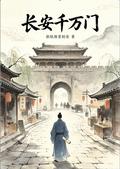
In the early years of the Southern Song, the Song and Jin armies faced each other across the Qinling Mountains.
At a dilapidated post station on the Chencang Road, a low-ranking clerk named Zhao Yan began by reclaiming wasteland and sheltering refugees, gradually bringing the abandoned ancient road back to life.
He crossed mountains in search of water, repaired plank roads, and relayed military intelligence. In the course of ordinary days, he met the mountain folk, travelers, and garrison soldiers of the Qinling Mountains. From the old river routes recorded in The Commentary on the Water Classic to the postal relay system described in the Comprehensive Record of the Taiping Era, forgotten stories from former dynasties lay hidden deep in the valleys, along with the faint hope of survival in a time of chaos.
Then the fires of war flared once more, and this ancient road linking Bashu with Guanzhong became the key to the fate of the region.
Those who guarded the road had long since become bound to it, blood and all.

The writing is delicate and smooth, and although there are no ups and downs in the plot, the story is described in detail, peacefully and tenderly, about those people in a difficult environment with nothing, who are serious about life and passionate about themselves, the most simple, hard-working and kind-hearted people who have nothing but their own working hands and have nothing but their own hands to create a beautiful picture of their own life through their own efforts. These people can obtain a self-sufficient, plain and practical life through their own hands. Isn't this just another picture of the Peach Blossom Land? Yes, they only have food and clothing, but in my eyes I see that the author depicts a pastoral life that people yearn for. Working at sunrise, endless life, as long as it is not destroyed by external forces, isn't it the most real and practical life?
The writing is good, the text is delicate, but there is one thing that I don't understand. The character Han Laowu in the book is an old soldier who cannot read Chinese characters, and then he leaves handwriting on the silk. The writing is quite good. Is it because the author is negligent or is he misplaced in time and space?
Zhao Yan has been at the post station for seven years, but he has not seen anyone give him a salary, nor has his superiors given him rice grains, including the Bazhong buckwheat he planted in the wasteland and a 100-jin wild boar that Han Laowu shot. He also gave away a third of it, so that he could feed Han Laowu's wife and Lu Laowu. We also need to pay wages to Carpenter Chen and Fang Shitou. Does Zhao Yan have the power to turn stone into gold? Zhao Yan and Han Lao Wu drank a jar of wild persimmon wine several times. When Ma Lao San brought the caravan for the first time, they had already given it to Ma Lao San to drink that night. How come the wounded piece removed from Dashanguan was shot in the thigh by an arrow, and the arrowhead was still in the thigh. He took out the wild persimmon wine and let the wounded soldier drink it, and then took the arrowhead for him. This can of wine is really inexhaustible!
It makes my blood boil to watch, with sadness, excitement, tears, and national resistance.
The writing is exquisite and the plot unfolds slowly like a book!
Your writing skills are solid and you can keep reading!
The author is talented, his writing style is delicate, and he has a strong sense of life. The early pure farming articles were all vivid and otherworldly online articles.
Good-looking, delicate and soft, with a strong sense of life, just like the people around you
The ups and downs of the story are recorded in the plain narrative, which I like very much.
The writing is delicate, the descriptions are realistic, and it looks and sounds good.