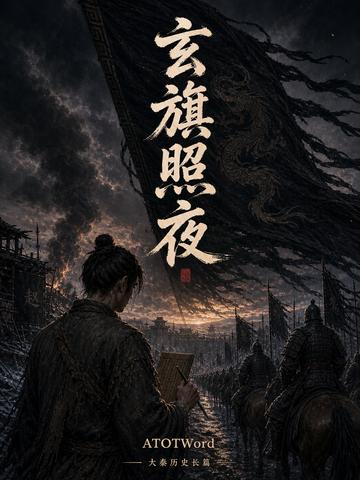
The Six Kingdoms are on the verge of falling, and the black water dragon banner comes from the west.
On the night Qin troops inspect household registers, Zhao Heng, a boy from Zhao, loses his family and home. He should have died in the chaos as a subject of a conquered state, but because he can read and write, the Qin military scribe Bai Yan saves him. From then on, he is forced to take up a brush colder than any blade. He follows the Qin army eastward through the fall of Han, the conquest of Zhao, the flooding of Daliang, the campaign against Chu with six hundred thousand troops, and the fall of Yan and surrender of Qi. He watches the old kingdoms go out one by one like candle flames, and sees an unprecedented empire take shape amid bamboo slips, military orders, and bones.
But the real test only begins after the realm is unified.
One written language, one set of tracks, unified weights and measures, commanderies across the four seas. Qin reshapes the world with laws, but also bends the people beneath forced labor, criminal statutes, and endless construction projects. Zhao Heng rises from a boy of a conquered state to a Qin official. The more he understands Qin’s strength, the more clearly he sees its cracks. Then an altered edict at Shaqiu changes everything, Fusu and Meng Tian are sent to their deaths, and a cry of rebellion at Dazexiang rings out across the realm. At last, he must answer one question:
When the empire demands that he uphold the law, but the people need him to save lives, to whom should he give his loyalty?
This is a tale of the grandeur of Qin’s conquest of the Six Kingdoms, and the price of unifying the realm. The six kings are vanquished and the land united, but the people may not give their hearts to it.