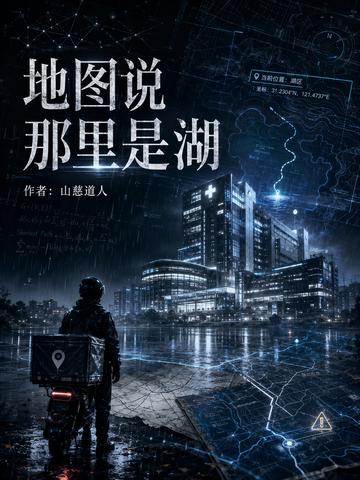
Ji Xundu, an applied mathematics graduate who is unemployed after graduating from college, relies on delivering food to support his rent and medicine expenses. His graduation project "Urban Connectivity Verification without Maps" was once rated as "does not have realistic application scenarios".
Until one rainy night, he received an order for hot porridge: he was sent to "Huining No. 3 Hospital, B2F, 17 beds."
The platform map showed that the end point was on Zhehu Lake; in reality, the unmarked path behind the flower box led to a brightly lit hospital.
The patient is real, the nurse is real, and the paper nursing notebook is real. But the platform did not recognize the delivery, the hospital electronic system did not recognize the patient, and the ambulance dispatch system did not recognize the admission.
Ji Xundu has no system and no cheating. He could only use the graph theory, road network connectivity, and residual analysis he had learned to reconcile rider deductions, yaw trajectories, delivery photos, nursing records, and old surveying maps one by one.
When the "Old Map Index", "Mirror City Node" and "Map Boundary" gradually surfaced, he discovered that modern cities are not only composed of roads and buildings, but also jointly explained by platforms, navigation, scheduling, medical records and databases.
If the system insists that there is a lake, then how much price do people have to pay in reality to prove that they exist?