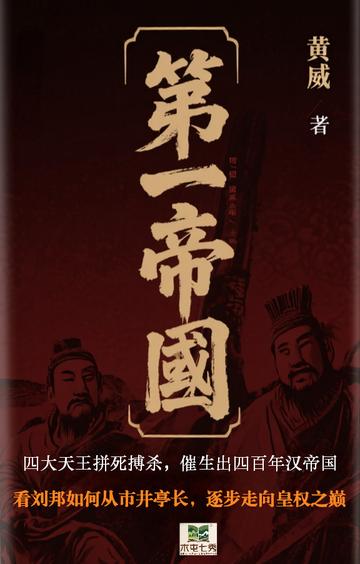
[Liu Bang + Xiang Yu + Ying Zheng + Mao Dun + Qin Empire + Han Empire + Xiongnu Empire] The four heavenly kings fought to the death and gave birth to the Han Empire for four hundred years. Let's see how Liu Bang went from being a businessman to a pavilion and gradually reaching the top of imperial power.
From the end of the Warring States Period to the beginning of the Han Dynasty, it was a special period when the "four heavenly kings" stood side by side in the world. During this period: King Yingzheng of Qin swept across Liuhe, Xiang Yu, the overlord of Western Chu, rose to the east of the Yangtze River, King Maodun of the Xiongnu fled to the desert, and the protagonist of this book, Liu Bang, the future founding emperor of the Han Dynasty, was also slowly rising, and inevitably had a fierce confrontation with the other three.
The warring states ended and the Qin Dynasty was strengthened to rule the world. From the perspectives of Liu Bang and Ying Zheng, one is the emperor who lives in a temple, and the other is the pavilion chief who is struggling to survive among the people. The worlds of the two reflect each other, which is the era when Qiang Qin ruled...
There was great chaos at the end of Qin. Xiang Yu, a son of an aristocratic family in the Chu State, and Liu Bang, a street gangster in the Chu State, are two people with completely different identities and backgrounds. Before becoming the strongest man in the world, they each experienced different ups and downs, but the same difficult struggle.
Fight.
Chu and Han fought for hegemony. Wise kings and good ministers succeed each other, ingenious schemes emerge in endlessly, and tactical geniuses gallop around the world... Although this period of history only lasted four short years, it can be called the most exciting and magnificent four years in the history of our country! The death of the giant tiger and the rise of the red dragon, between a victory and a loss, create an eternal legend that future generations will look up to.
It's hard to start a business, but even harder to stay in business. With his old and disabled body, Liu Bang continued to carry out wars to reduce vassal vassals and suppress rebellions. In the northern grasslands, the Hun King Maodun, who dominated the desert, also set his sights on this rich Chinese land.
Reader comments
The writing style of this book "The First Empire" is lively and lively, but at the same time it is rigorous. It is like watching a super-hot battle of kings! Ying Zheng's iron blood, Xiang Yu's bravery, Mao Dun's cunning and Liu Bang's harmony, the four bosses compete on the same stage, which makes people's blood boil. There is no absolute desperate situation in life, and heroes do not care where they come from. Liu Bang counterattacked from a commoner to the founding emperor, relying not on brute force but on pattern and resilience. A truly strong person is one who perseveres in the face of adversity and knows how to balance people's hearts in a game.
This historical novel focuses on the turn of the Qin and Han Dynasties, interweaving the disputes between the Central Plains and the Xiongnu overlords. From the mayor of the market to the founding emperor, it fully demonstrates Liu Bang's counterattack, with war and power intertwined, making it a majestic read.
This book breaks out of the single narrative framework of Qin and Han Dynasties and places the four heroes of the era, Ying Zheng, Xiang Yu, Liu Bang, and Mao Dun, on the same historical stage, connecting the complete historical context of Qin's unification of the world, the chaotic times at the end of Qin, the struggle for hegemony between Chu and Han, and the northern imperial conquest of the Xiongnu in the early Han Dynasty. On one side, Ying Zheng swept across the world and established the Qin Dynasty, ruling the world from above; on the other side, Liu Bang, the mayor of the city and pavilion, struggled to survive at the bottom. The contrast between the perspectives of the two classes paints a bipolar picture of the Qin era.
"The First Empire" is set in the troubled times of the late Qin and early Han dynasties, depicting the game of Ying Zheng, Liu Bang, Xiang Yu and other heroes. The grand narrative unfolds the rise and fall of the dynasty over four hundred years, meticulously dismantling the power struggles and the general trend of the times, with three-dimensional and vivid characters, and narrates the cruelty and grandeur of the establishment of the dynasty.
The ten or twenty years between the end of the Qin Dynasty and the beginning of the Han Dynasty was undoubtedly a short era, but its importance in Chinese history was like enriched uranium, which contained the ability to detonate nuclear bombs.
The First Emperor, the Han Emperor, the Overlord, the Chanyu, and the four heavenly kings all made unique moves and fought bravely, all leaving a mark in the long history of history!
Taking the rise of the Four Heavenly Kings as a clue, it restores the century-old history of the empire from its inception to its peak. The author uses a grand narrative perspective to analyze the cruelty of power changes and the logic of the rise and fall of empires, showing the weight of history and the game of human nature in the game of power, with a grand pattern and a long lasting aftertaste.
The four heavenly kings fought to the death and gave birth to the Han Empire for four hundred years. Watch Liu Bang start as a commoner in the market, plan step by step, and reach the top of power. In troubled times, there are conflicts and intrigues, and heroes from all walks of life take turns to appear. Behind the glory of the rise of the dynasty are intrigues, sacrifices and countless fateful ups and downs.
The whole book unfolds a grand scroll of troubled times: from the refugees to a powerful force, from the continuous war to the unification of the four seas. The battlefield confrontation between the armed forces and the iron horses is exciting, but what is more important is the governance game after the establishment of the dynasty. To build an empire, rely on force; to maintain an empire, rely on people's hearts and systems.
Ying Zheng was born in the royal family and was born with power. He used thunderous means to end troubled times, but was trapped by the hidden dangers of tyranny after unification. Liu Bang was born in the city, without family background and military strength. He understood people by tolerance, tolerated and adapted step by step, and represented another kind of emperor's way of grassroots counterattack.
The story is based on the chaotic times of the late Qin and early Han dynasties, where heroes Ying Zheng, Liu Bang, and Xiang Yu compete. Heroes from all walks of life competed in bloody battles, from the mayor of the city to the emperor, vividly interpreting the game of power and strategy, and describing the fighting, tolerance and the general trend of the times behind the establishment of the dynasty.
The most outstanding part of this book is the sharp contrast between the characters, which reveals the impact of identity on destiny.
Ying Zheng was born in the royal family, and he conquered the six kingdoms with his talents, and he had a prosperous empire, but he could not stop the rapid decline of the dynasty; Xiang Yu was a noble man of Chu State, with unparalleled military power and strong temperament. He was heroic but did not know how to manipulate people's hearts; Liu Bang started in the market, had a humble background, was smooth and tolerant, knew people well, and won the last laugh with his tolerance and strategy.
"The First Empire" written by Huang Wei focuses on the struggle for hegemony between the Qin and Han Dynasties, and sorts out the entire process of the birth of the Han Empire. The story of Liu Bang, the mayor of the city pavilion, who climbed to the top step by step is extremely tense, has both a sense of history and storytelling, and reveals the human nature and the current of the times behind the struggle for power.
"The First Empire" tells the story of the turbulent times during the Qin and Han Dynasties, when the four great kings Ying Zheng, Xiang Yu, Liu Bang, and Mao Dun competed for power in the world. Taking the rise of Liu Bang as the main line, it restores the conquests and power games in troubled times, with a grand historical pattern and vivid and three-dimensional character depictions.
This book combs the complete process of the rise and collapse of the empire, and the grand narrative outlines the royal conquests and system changes. The book analyzes the pros and cons behind power, looks back at the gains and losses of dynasties, and understands the profound impact of power on the times and human nature through the choices of historical figures.
At the end of the Qin Dynasty and the beginning of the Han Dynasty, the four heavenly kings fought to the extreme. In order to consolidate their power and compete for the world, they each came up with strange plans and conspiracies, and together they staged thrilling real-life dramas!
The heroes compete to rule the world, telling the story of Liu Bang's grass-roots rise to the throne, the strife in troubled times and the machinations of the imperial court.





The writing style of this book "The First Empire" is lively and lively, but at the same time it is rigorous. It is like watching a super-hot battle of kings! Ying Zheng's iron blood, Xiang Yu's bravery, Mao Dun's cunning and Liu Bang's harmony, the four bosses compete on the same stage, which makes people's blood boil. There is no absolute desperate situation in life, and heroes do not care where they come from. Liu Bang counterattacked from a commoner to the founding emperor, relying not on brute force but on pattern and resilience. A truly strong person is one who perseveres in the face of adversity and knows how to balance people's hearts in a game.
This historical novel focuses on the turn of the Qin and Han Dynasties, interweaving the disputes between the Central Plains and the Xiongnu overlords. From the mayor of the market to the founding emperor, it fully demonstrates Liu Bang's counterattack, with war and power intertwined, making it a majestic read.
This book breaks out of the single narrative framework of Qin and Han Dynasties and places the four heroes of the era, Ying Zheng, Xiang Yu, Liu Bang, and Mao Dun, on the same historical stage, connecting the complete historical context of Qin's unification of the world, the chaotic times at the end of Qin, the struggle for hegemony between Chu and Han, and the northern imperial conquest of the Xiongnu in the early Han Dynasty. On one side, Ying Zheng swept across the world and established the Qin Dynasty, ruling the world from above; on the other side, Liu Bang, the mayor of the city and pavilion, struggled to survive at the bottom. The contrast between the perspectives of the two classes paints a bipolar picture of the Qin era.
"The First Empire" is set in the troubled times of the late Qin and early Han dynasties, depicting the game of Ying Zheng, Liu Bang, Xiang Yu and other heroes. The grand narrative unfolds the rise and fall of the dynasty over four hundred years, meticulously dismantling the power struggles and the general trend of the times, with three-dimensional and vivid characters, and narrates the cruelty and grandeur of the establishment of the dynasty.
The ten or twenty years between the end of the Qin Dynasty and the beginning of the Han Dynasty was undoubtedly a short era, but its importance in Chinese history was like enriched uranium, which contained the ability to detonate nuclear bombs. The First Emperor, the Han Emperor, the Overlord, the Chanyu, and the four heavenly kings all made unique moves and fought bravely, all leaving a mark in the long history of history!
Taking the rise of the Four Heavenly Kings as a clue, it restores the century-old history of the empire from its inception to its peak. The author uses a grand narrative perspective to analyze the cruelty of power changes and the logic of the rise and fall of empires, showing the weight of history and the game of human nature in the game of power, with a grand pattern and a long lasting aftertaste.
The four heavenly kings fought to the death and gave birth to the Han Empire for four hundred years. Watch Liu Bang start as a commoner in the market, plan step by step, and reach the top of power. In troubled times, there are conflicts and intrigues, and heroes from all walks of life take turns to appear. Behind the glory of the rise of the dynasty are intrigues, sacrifices and countless fateful ups and downs.
The whole book unfolds a grand scroll of troubled times: from the refugees to a powerful force, from the continuous war to the unification of the four seas. The battlefield confrontation between the armed forces and the iron horses is exciting, but what is more important is the governance game after the establishment of the dynasty. To build an empire, rely on force; to maintain an empire, rely on people's hearts and systems.
Ying Zheng was born in the royal family and was born with power. He used thunderous means to end troubled times, but was trapped by the hidden dangers of tyranny after unification. Liu Bang was born in the city, without family background and military strength. He understood people by tolerance, tolerated and adapted step by step, and represented another kind of emperor's way of grassroots counterattack.
The story is based on the chaotic times of the late Qin and early Han dynasties, where heroes Ying Zheng, Liu Bang, and Xiang Yu compete. Heroes from all walks of life competed in bloody battles, from the mayor of the city to the emperor, vividly interpreting the game of power and strategy, and describing the fighting, tolerance and the general trend of the times behind the establishment of the dynasty.
The most outstanding part of this book is the sharp contrast between the characters, which reveals the impact of identity on destiny. Ying Zheng was born in the royal family, and he conquered the six kingdoms with his talents, and he had a prosperous empire, but he could not stop the rapid decline of the dynasty; Xiang Yu was a noble man of Chu State, with unparalleled military power and strong temperament. He was heroic but did not know how to manipulate people's hearts; Liu Bang started in the market, had a humble background, was smooth and tolerant, knew people well, and won the last laugh with his tolerance and strategy.
"The First Empire" written by Huang Wei focuses on the struggle for hegemony between the Qin and Han Dynasties, and sorts out the entire process of the birth of the Han Empire. The story of Liu Bang, the mayor of the city pavilion, who climbed to the top step by step is extremely tense, has both a sense of history and storytelling, and reveals the human nature and the current of the times behind the struggle for power.
"The First Empire" tells the story of the turbulent times during the Qin and Han Dynasties, when the four great kings Ying Zheng, Xiang Yu, Liu Bang, and Mao Dun competed for power in the world. Taking the rise of Liu Bang as the main line, it restores the conquests and power games in troubled times, with a grand historical pattern and vivid and three-dimensional character depictions.
This book combs the complete process of the rise and collapse of the empire, and the grand narrative outlines the royal conquests and system changes. The book analyzes the pros and cons behind power, looks back at the gains and losses of dynasties, and understands the profound impact of power on the times and human nature through the choices of historical figures.
At the end of the Qin Dynasty and the beginning of the Han Dynasty, the four heavenly kings fought to the extreme. In order to consolidate their power and compete for the world, they each came up with strange plans and conspiracies, and together they staged thrilling real-life dramas!
The heroes compete to rule the world, telling the story of Liu Bang's grass-roots rise to the throne, the strife in troubled times and the machinations of the imperial court.