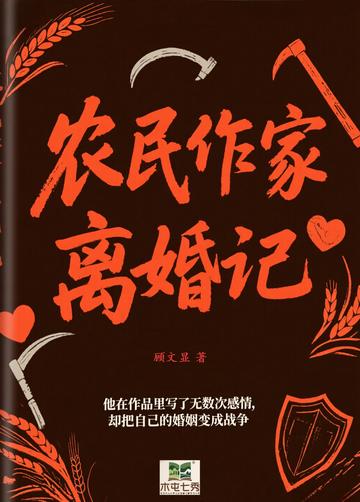
[Era + Extreme Divorce + Emotion + Writer + Family Ethics + Extreme Pulling] He wrote about feelings countless times in his works, but turned his marriage into a war.
The story takes place around the 1990s and tells the story of the transformation of the peasant writer Guo Yaping after he became famous.
The self-taught writer Guo Yaping and his wife Zhang Shuying in the valley have long been estranged from each other due to differences in culture, personality, and vision. This year, because one of his works won an award, he was invited to the provincial capital to receive the award. He met Liu Yan'er, a prostitute, in a hotel and helped her out of a sense of justice.
Previously, Guo Yaping was the deputy director of the Theater Creation Studio and was already well-known. Soon after the Theater Creation Studio was disbanded, he was transferred to the Art Museum based on his talent, where he had the opportunity to participate in various activities. Guo Yaping accidentally met his classmate Wu Xiuhua in the city, and accidentally met the innocent and beautiful Xue Hong, and he couldn't help but have wild imaginations. He met fellow countryman Zhang Jie again, and Zhang Jie bluntly said that he would commit himself to her. He also met several young women who took the initiative to show their kindness. Although Guo Yaping was often dissatisfied, he still held on to his defense in the end. Zhang Shuying became jealous after learning the news, and Guo Yaping decided to divorce.
Soon, Guo Yaping easily became Wu Xiuhua's prisoner. He received her letter of renunciation the next day, and Guo Yaping turned all his dissatisfaction onto Zhang Shuying. In order to win Guo Yaping's heart, Zhang Shuying asked Guo's old friend Che Lianpeng for advice, and mobilized all her connections to try to persuade Guo Yaping. Guo Yaping became increasingly angry and drank to drown his sorrows. During this period, he came into contact with several more female authors. Although nothing happened, Zhang Shuying pierced Xue Hong's eyes out of jealousy, and Guo Yaping finally filed for divorce.
Zhang Shuying had another hidden agenda. She pretended to agree to divorce, went around in private, talked about how loving the husband and wife were, and influenced the judge through their relationship. She also pretended to be gentle and weak in court. Guo Yaping further understood her insidiousness. Guo Yaping met the young beauty Du Mingming at the PEN Club, but he did not break through the defense line. Du Mingming, who was moved, confessed frankly that he was hired by Zhang Shuying in order to seize his handle. Guo Yaping felt shuddering. Zhang Shuying threatened Xue Hong through the judge, but Xue Hong was prompted to take the initiative to fall into Guo's arms. Guo Yaping eventually became the hypocrite he ridiculed.
Seeing that Guo Yaping was determined to divorce, Zhang Shuying had a split mentality and worked hard to earn money to give to lawyers and judges, hoping to ruin Guo Yaping's reputation. She was watching Guo Yaping being gang-raped again, and she actually felt a sense of revenge to relieve her anger. She also hired someone to beat Guo Yaping up, and when she came into contact with the murderer, she was raped again. Guo Yaping fought fire with fire and tried to make friends with the judge, finally seeing the light of divorce, but Zhang Shuying went crazy at this juncture...
Reader comments
This book "The Divorce of a Farmer Writer" is a bit irritating but the writing is very reflective [facepalm]. It can simply be said to be the 90s version of "The Divorce of a Scumbag"! Guo Yaping's operation is so suffocating. While enjoying the sacrifice of getting a wife, he pretends to be aloof and ambiguous in Vanity Fair, and finally turns his good life into a "spy movie". It made my blood pressure soar, but the truth behind it is very profound. If talent and character do not match, it will be a disaster. Whether it is marriage or life, never overestimate your own strength, nor underestimate the despair of the person next to you. Only a relationship of mutual respect can go a long way, otherwise no amount of halo can cover the inner absurdity!
This book is a realistic novel written by Gu Wenxian. The story is rooted in the social transformation period of the 1990s and focuses on Guo Yaping, a peasant writer who came out of the ravine. When a lower-class literati from a rural background relied on writing to get out of the mountains and enter the urban literary and art circles, the gap between urban and rural vision, cultural cognition, and life concepts directly crushed his long-term marriage with his first wife Zhang Shuying. The author uses the tug-of-war of divorce to outline the irreconcilable contradictions between the countryside and the city, traditional rural women and new literary and artistic creators of that era. The background of the era is not an embellishment, but the root cause of this broken relationship.
After the peasant writer became famous, his psychology became a bit bloated, and coupled with the bad relationship between the couple, they finally decided to divorce. But the wife is not simple either, and the two sides start a fierce game... And the final outcome makes people sigh.
This novel combines the identity of a writer with the identity of a farmer, and the entry point is very novel. The marriage rift is the beginning of the story, unfolding the conflicts caused by daily necessities, rice, oil and salt. The language is simple and life-like, without gorgeous rhetoric. It not only tells about a divorce incident, but also reflects the concept of marriage and love in rural areas and the living difficulties of ordinary farmers. It has a full sense of reality and allows readers to have a glimpse of the triviality and helplessness of rural life.
This book takes the marriage breakdown of a rural writer as the main line, depicting the conflict between ideals and money in the rural reality. The spiritual gap between the husband and wife is difficult to resolve. The plain narrative reveals the helplessness of the lower class literati and the difficult life dilemma of ordinary people trapped between urban and rural areas.
Gu Wenxian's "The Divorce of a Peasant Writer" takes the 1990s as the stage, focusing on Guo Yaping, a self-taught peasant writer in the mountains, and outlines the tragedy of the complete collapse of ideals, morals, and marriages after the rural literati walked out of the mountains and entered the urban literary and art circles. From the bottom of the countryside to the art gallery and the PEN meeting venue, the jump in status brings about drastic changes in vision and desire. The old rural marriage model and the temptation of the urban literary and art circle fiercely conflict. The entire novel is centered on a long, twisted, and tumultuous divorce battle, which dissects the mental dilemma of ordinary people in a specific era.
The novel combines the dual identities of farmer and writer, uses the broken marriage in the historical background as an incision, and depicts the endless family conflicts in daily life. The male protagonist is good at writing about love in the world, but he is not good at managing his own marriage. The strong contrast is extremely ironic. The writing is simple and realistic, digging into the gaps in concepts and life between lower-class couples, and portraying the grievances and struggles in ordinary marriages in a real and moving way.
Peasant writers wrote about the joys and sorrows of their neighbors and the warmth and coldness of their country, but they could not handle their own relationship between husband and wife. Traditional rural marriages emphasize living together, but when he gained independent thought through reading and writing, he could no longer endure a marriage without communication and understanding. This book tears apart the real dilemma of rural marriage, which is ordinary and highly empathetic.
The peasant literati who was proficient in writing and good at writing love stories failed to manage his own marriage well. The novel directly faces the conflicts in rural marriages, and depicts the family pull in an extremely realistic manner, directly conveying the helplessness of broken relationships during the Chaimi years.
The heroine Jian Shuying's character arc is even more tragic. Initially, she only retained her husband out of jealousy, but her mentality gradually became distorted during the tug-of-war divorce: she secretly used connections to intervene in the court hearing, hired women to set up traps to take advantage of her husband, and used her power to threaten innocent women; she actually took pleasure in witnessing her husband's suffering, and she did not hesitate to pay a heavy price for revenge, and finally suffered a complete mental breakdown. The confrontation between the two is no longer a conflict between husband and wife, but a war of attrition of human nature that hurts both sides.
"The Divorce of a Peasant Writer" is rooted in the life of the rural lower class and unfolds with the marriage story of a wine warehouse worker. The simple words express the emotional pull and helplessness of ordinary people. It truly depicts the conflicts between ordinary couples, full of down-to-earth human fireworks, delicate and heart-wrenching.
A novel with a sense of time. The story takes place in the early 1990s. A writer with a peasant background won awards in the province for his works. His social status rose sharply, and countless female fans approached him. The writer was very excited and often struggled between desire and reason, which eventually led to family conflicts and divorced his wife. But the wife is not easy to mess with, so exciting games begin...
A peasant writer who writes about endless love is trapped in a broken marriage. The novel focuses on rural marriage ethics, the conflicts are real and heartbreaking, and the simple words express the realistic helplessness of couples getting along.
"The Divorce of a Farmer Writer" has a strong local atmosphere, and the material selection is very down-to-earth. The conflict at the marital level is thrown out at the beginning. The stingy wife and the troubled peasant male lead, the characters are vivid and down-to-earth. The story revolves around the divorce crisis, reflecting the real frictions in the marriages of ordinary people in rural areas, and depicting the embarrassment of the lives of low-level creators. The daily details are real and poignant, and can easily arouse the empathy of readers.













This book "The Divorce of a Farmer Writer" is a bit irritating but the writing is very reflective [facepalm]. It can simply be said to be the 90s version of "The Divorce of a Scumbag"! Guo Yaping's operation is so suffocating. While enjoying the sacrifice of getting a wife, he pretends to be aloof and ambiguous in Vanity Fair, and finally turns his good life into a "spy movie". It made my blood pressure soar, but the truth behind it is very profound. If talent and character do not match, it will be a disaster. Whether it is marriage or life, never overestimate your own strength, nor underestimate the despair of the person next to you. Only a relationship of mutual respect can go a long way, otherwise no amount of halo can cover the inner absurdity!
This book is a realistic novel written by Gu Wenxian. The story is rooted in the social transformation period of the 1990s and focuses on Guo Yaping, a peasant writer who came out of the ravine. When a lower-class literati from a rural background relied on writing to get out of the mountains and enter the urban literary and art circles, the gap between urban and rural vision, cultural cognition, and life concepts directly crushed his long-term marriage with his first wife Zhang Shuying. The author uses the tug-of-war of divorce to outline the irreconcilable contradictions between the countryside and the city, traditional rural women and new literary and artistic creators of that era. The background of the era is not an embellishment, but the root cause of this broken relationship.
After the peasant writer became famous, his psychology became a bit bloated, and coupled with the bad relationship between the couple, they finally decided to divorce. But the wife is not simple either, and the two sides start a fierce game... And the final outcome makes people sigh.
This novel combines the identity of a writer with the identity of a farmer, and the entry point is very novel. The marriage rift is the beginning of the story, unfolding the conflicts caused by daily necessities, rice, oil and salt. The language is simple and life-like, without gorgeous rhetoric. It not only tells about a divorce incident, but also reflects the concept of marriage and love in rural areas and the living difficulties of ordinary farmers. It has a full sense of reality and allows readers to have a glimpse of the triviality and helplessness of rural life.
This book takes the marriage breakdown of a rural writer as the main line, depicting the conflict between ideals and money in the rural reality. The spiritual gap between the husband and wife is difficult to resolve. The plain narrative reveals the helplessness of the lower class literati and the difficult life dilemma of ordinary people trapped between urban and rural areas.
Gu Wenxian's "The Divorce of a Peasant Writer" takes the 1990s as the stage, focusing on Guo Yaping, a self-taught peasant writer in the mountains, and outlines the tragedy of the complete collapse of ideals, morals, and marriages after the rural literati walked out of the mountains and entered the urban literary and art circles. From the bottom of the countryside to the art gallery and the PEN meeting venue, the jump in status brings about drastic changes in vision and desire. The old rural marriage model and the temptation of the urban literary and art circle fiercely conflict. The entire novel is centered on a long, twisted, and tumultuous divorce battle, which dissects the mental dilemma of ordinary people in a specific era.
The novel combines the dual identities of farmer and writer, uses the broken marriage in the historical background as an incision, and depicts the endless family conflicts in daily life. The male protagonist is good at writing about love in the world, but he is not good at managing his own marriage. The strong contrast is extremely ironic. The writing is simple and realistic, digging into the gaps in concepts and life between lower-class couples, and portraying the grievances and struggles in ordinary marriages in a real and moving way.
Peasant writers wrote about the joys and sorrows of their neighbors and the warmth and coldness of their country, but they could not handle their own relationship between husband and wife. Traditional rural marriages emphasize living together, but when he gained independent thought through reading and writing, he could no longer endure a marriage without communication and understanding. This book tears apart the real dilemma of rural marriage, which is ordinary and highly empathetic.
The peasant literati who was proficient in writing and good at writing love stories failed to manage his own marriage well. The novel directly faces the conflicts in rural marriages, and depicts the family pull in an extremely realistic manner, directly conveying the helplessness of broken relationships during the Chaimi years.
The heroine Jian Shuying's character arc is even more tragic. Initially, she only retained her husband out of jealousy, but her mentality gradually became distorted during the tug-of-war divorce: she secretly used connections to intervene in the court hearing, hired women to set up traps to take advantage of her husband, and used her power to threaten innocent women; she actually took pleasure in witnessing her husband's suffering, and she did not hesitate to pay a heavy price for revenge, and finally suffered a complete mental breakdown. The confrontation between the two is no longer a conflict between husband and wife, but a war of attrition of human nature that hurts both sides.
"The Divorce of a Peasant Writer" is rooted in the life of the rural lower class and unfolds with the marriage story of a wine warehouse worker. The simple words express the emotional pull and helplessness of ordinary people. It truly depicts the conflicts between ordinary couples, full of down-to-earth human fireworks, delicate and heart-wrenching.
A novel with a sense of time. The story takes place in the early 1990s. A writer with a peasant background won awards in the province for his works. His social status rose sharply, and countless female fans approached him. The writer was very excited and often struggled between desire and reason, which eventually led to family conflicts and divorced his wife. But the wife is not easy to mess with, so exciting games begin...
A peasant writer who writes about endless love is trapped in a broken marriage. The novel focuses on rural marriage ethics, the conflicts are real and heartbreaking, and the simple words express the realistic helplessness of couples getting along.
"The Divorce of a Farmer Writer" has a strong local atmosphere, and the material selection is very down-to-earth. The conflict at the marital level is thrown out at the beginning. The stingy wife and the troubled peasant male lead, the characters are vivid and down-to-earth. The story revolves around the divorce crisis, reflecting the real frictions in the marriages of ordinary people in rural areas, and depicting the embarrassment of the lives of low-level creators. The daily details are real and poignant, and can easily arouse the empathy of readers.