The yen fell below the 160 mark. On the surface, it was a fluctuation in the exchange rate, but in fact it was a turning point in Japan's national destiny. Its economic cushion has been worn out, and its government debt is the largest in the world. Raising interest rates will drag down the fiscal system. If interest rates are not raised, the yen will continue to depreciate, capital will flow out, and the risk of economic collapse will increase. The road to serious economic development will not work, and the only hope is that war will pass on the crisis.
Japan is promoting war preparations across the country, and the war preparation system has been implemented from top to bottom. The Ground Self-Defense Force has signed contracts with 47 prefectures and counties across the country and the largest funeral institutions, so that after the outbreak of war, it can seamlessly handle military casualties. At the same time, a large number of ammunition depots were built across the country, wartime medical supplies were purchased globally, and troop establishments (including conventional, cyber, and electronic warfare forces) were fully expanded, and the actions were completely in line with actual combat standards.
This radical turn has a basis in public opinion. The Japanese people lack a sense of security due to frequent earthquakes and are affected by the dividends of historical wars. They have formed the understanding that external expansion "makes money faster" than economic development. Coupled with the closed information environment and blind confidence in their own military power, the entire people are eager to rely on war to make a comeback.
In terms of military layout, Japan has deployed Type 12 shore-to-ship missile launch vehicles and supporting drones on Minamitori Island. Its upgraded Type 25 missile has a range of more than 1,000 kilometers and has strong defense penetration capabilities. This deployment can lock the Western Pacific waterways, attack ships sailing out of the first island chain, and also provide Japan with a thousands-kilometer-level live ammunition shooting range. In conjunction with the layer-by-layer layout of the first island chain, a "one island, one fortress" firepower network is formed, relying on AI intelligent networking to achieve multi-directional saturation strikes, and adopting the U. S. Military's "distributed killing" idea. Japan assumes 70% of frontline tasks.
Reader comments
It makes people excited to see it. It's fun to fight against a small Japan [laughing], and the names of Japanese ships can be added later. It feels a bit dull to keep calling the numbers. Only four Kongo-class ships were built, followed by two Atagos, two Mayas, and four American-made LM-2500 gas turbines used in the Izumo-class.
Multi-dimensional description, good writing, logical thinking and attractive storyline.
An exciting book
Descriptions of modern warfare are rare, there are too few of them
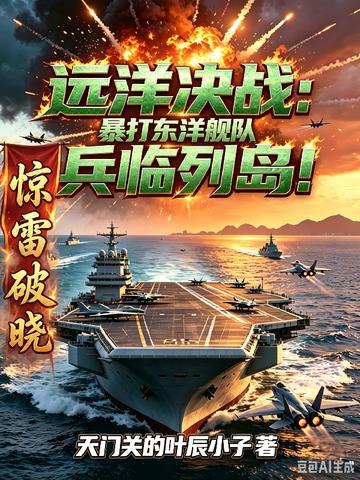
It makes people excited to see it. It's fun to fight against a small Japan [laughing], and the names of Japanese ships can be added later. It feels a bit dull to keep calling the numbers. Only four Kongo-class ships were built, followed by two Atagos, two Mayas, and four American-made LM-2500 gas turbines used in the Izumo-class.
Multi-dimensional description, good writing, logical thinking and attractive storyline.
An exciting book
Descriptions of modern warfare are rare, there are too few of them