Three hours into the apocalypse, Lu Zhou is still alive.
Not because he can fight. He wouldn’t dare take on even the lowest-level zombie. He’s alive simply because he’s willing to read.
After reading every rule on his status screen, he discovers a counterintuitive hidden clause: life skills can secretly improve combat attributes.
But 24 hours later, that clause permanently disappears from every survivor’s status screen.
Lu Zhou thinks he’s the only one who found it. Then, a month later, in the underground market of a safe zone, he sees a man haggling in exactly the same way he does: one hand making a subtle swipe at an inconspicuous spot on the status screen.
Their eyes meet.
The man gives a faint smile. “So you’re a Reader too.”
This world hides an “information class” that has never come into the open. They don’t kill zombies or build armies. They quietly expand their reach through the cracks in the rules. And now Lu Zhou has been given a ticket in, as long as he can prove he’s worth the price by surviving the next 24 hours.
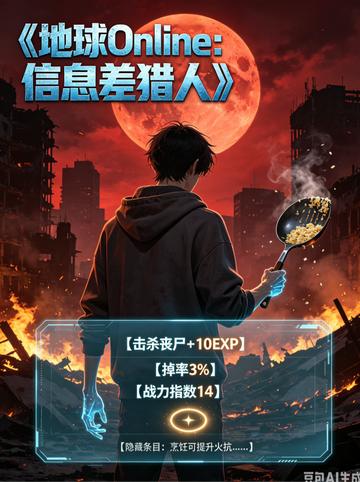
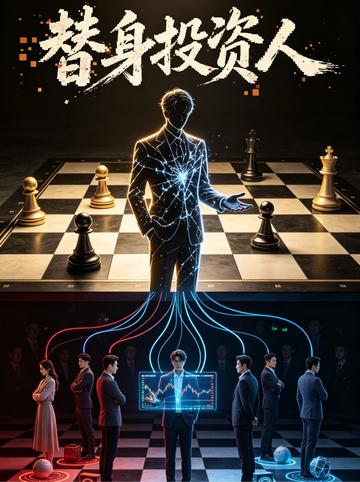

If you're looking for a different apocalypse book - try this one. Not a retired soldier, not a reborn person, not a chosen one with his own cheats. The protagonist, Lu Zhou, is a night shift worker at a convenience store. On the day of the blood moon, he did not run for his life or grab supplies. He squatted in the kitchen and cooked a pot of egg fried rice. Because he finished reading the line of small gray words on the panel that everyone ignored. This beginning sets the tone. All of his survivability abilities come from the skills accumulated at the bottom of society - taking stock of inventory, calculating shelf life, reading user agreements, and judging whether anyone has passed by from the distribution of garbage on the ground. Others relied on killing to upgrade, but he relied on the memory of two years of watching old masters repair things at the hardware store, and repaired the water pump in the community. Then an emergency department nurse knocked on his door. An errand boy who had been kicked out of the safe area squatted downstairs. The nurse can stitch more neatly than he can stir-fry rice and beat eggs. He has done 47 errands and made zero fraud. The three little people, treated as background noise by the system, are the only ones reading the user agreement. The pace of this book is not fast. There are no three chapters that are explosive. But if you are willing to give him a few chapters to finish the bowl of egg fried rice, you will find a rare reading experience - every detail is useful, every foreshadowing will be recycled, and the trust between the characters is earned step by step, not given by the plot. There are still many images that cannot be forgotten. The line burned by the cigarette butt on the ground. Oil spots on the lenses that cannot be wiped off. The salt started to dampen the egg fried rice. Shen Zhiyu pushed the zombie's jaw back to its original position, closed its eyes, and said, "This is the first patient to die in my hands." Not the kind of book that brings tears to your eyes. It's the kind of book that reminds you of a certain scene or sentence long after you finish reading it. If you like stories about smart people trying hard to survive, I recommend this to you.
Apocalyptic gamification + information gap cheat, fresh setting and extremely fast pace. The protagonist relies on the prophet's advantage to play the dungeon, his IQ is not as good as the Virgin, and he feels intensely happy. There are some clichés in the middle period, but overall it is an easy read and suitable for readers who like fast-paced post-apocalyptic system flow.