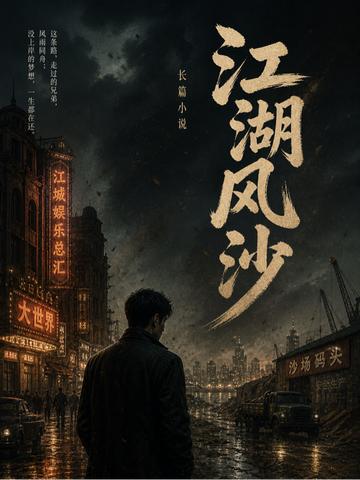
In the late 1990s, there was an apprentice at a car repair shop in the south of Minjiang City, named Chen Wangshan.
He was born low and had a hard life. His father died young and his mother was sick. He grew up in the old streets relying on his master, Lao Liang, for a meal and a wrench. At that time, he thought that the most he would do in his life would be repairing cars, raising a family, and standing up for his brothers a few times.
Until a fight on a rainy night pushed him under the lights of the Golden Coast.
Nightclubs, gambling stalls, sand and gravel, mining, freight, engineering, capital, officialdom... Changing card tables one by one, Chen Wangshan changed from "Shanzi" to "Brother Shan". He has brothers, a territory, money, and one unpayable debt after another.
Someone followed him to death.
Someone turns bad halfway.
Someone went to jail for him.
Someone died in front of him.
Some people call him big brother, while others are sharpening their knives behind his back.
His right hand was disabled and he could not repair the car; his heart was also hardened and he could not look back.
Twenty years of wind and sand from rivers and lakes have blown across the Minjiang River and blinded many people. When the crackdown began in 2018, old accounts were uncovered page by page, and those who once sat at the table began to find their own ways.
Some people say that Chen Wangshan should have fallen long ago.
Some say he just had bad luck.
Some people also say that during those years in Minjiang, we couldn't do it without him, and we can't do it with him.
Later, when people in the old streets in the south of the city mentioned him again, they would only lower their voices and say:
There was a strong wind and sand that year, and Brother Shan was buried in the sand.