[Born into an ancient setting + confiscation and exile + appraising treasures to break the deadlock + developing Xizhou + two strong leads in a battle of wits + marriage first, love later]
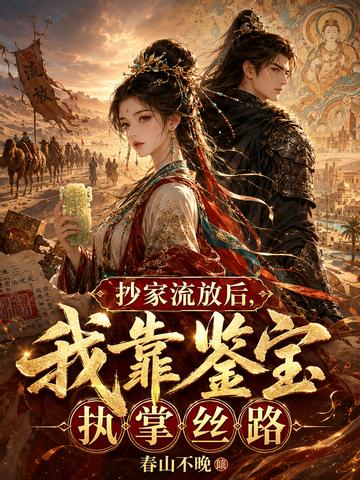
While everyone else relies on a storage space to stockpile supplies before exile, Wang Yan has a pair of eyes for appraising treasures and a wealth of knowledge about Xizhou’s history.
She was a modern-day PhD in Dunhuang studies, reborn in the womb as the legitimate daughter of the Langya Wang clan. She waited seventeen years for the chance to take the road to Xizhou and preserve its documents, Buddhist grottoes, and civilization, all on the verge of being swallowed by the sands, for future generations.
But just after the imperial decree granting her marriage was issued, the Prince of Zhennan’s household was accused of treason. Her betrothed, Xie Heng, was badly wounded and thrown in prison, the entire Xie family was condemned to exile, and the Wang clan immediately disowned her.
A thousand miles of desolate roads, elderly and infirm clan members, and a manhunt by the imperial court: everyone expected her to die.
But she refused to.
Evidence of a frame-up was hidden among the fakes, the truth behind an old case was concealed in foreign words, underground water in the desert could save an entire clan, and even a damaged document could overturn a conspiracy in the court.
On the road to exile, she rescued the vulnerable, set rules, foiled pursuers, and won people over. Once in Xizhou, she opened trade markets, repaired qanat wells, built schools, and protected Buddhist grottoes, turning a desperate, desolate city into a major Silk Road hub.
At first, Xie Heng saw her only as his wife and dared not speak of love. Only later did he understand that what she sought to protect was never just a city.
He guarded the land; she guarded its civilization.
After a thousand years of wind and sand, someone must leave a light burning for those who come after.
This is a love letter to civilization.
It has an extremely tacky opening - marriage, confiscation of home, exile, but within this cliché there is a rare, still-water-deep sense of sophistication. The golden finger of the heroine Wang Ju is not the system or the spiritual spring, but her professional qualities as a doctor of cultural relics - treasure appraisal and valuation to control trade routes, multilingual skills to connect all ethnic groups, hydrology and geography to save Xizhou, document research to reverse the family's case, and Dunhuang studies to allow her to record everything before destruction. Her relationship with Xie Heng, the actual leader of the North, is not about who is attached to the other, but about two chess players completing a long process of mutual recognition on the chessboard of destiny. What he defends is territory, and what she defends is civilization. The most advanced romance in the book is hidden in the Sogdian inscription in the Dunhuang Buddhist Grottoes - someone lit a lamp in the darkness a thousand years ago, and a thousand years later the person who was willing to add fuel to it came.
The characters are portrayed very delicately, the story is wonderfully written, the rhythm is very strong, and it is very comfortable to watch.
I really like this setting. The story is very logical, the rhythm is tight, and it's not laggy at all.
He defends the territory, and she defends civilization. The two are entangled with each other, which is very exciting.
It's super exciting, the story is so well written, and the characters are so three-dimensional.
The story is wonderfully written, rich in content, and great


This is a love letter to civilization. It has an extremely tacky opening - marriage, confiscation of home, exile, but within this cliché there is a rare, still-water-deep sense of sophistication. The golden finger of the heroine Wang Ju is not the system or the spiritual spring, but her professional qualities as a doctor of cultural relics - treasure appraisal and valuation to control trade routes, multilingual skills to connect all ethnic groups, hydrology and geography to save Xizhou, document research to reverse the family's case, and Dunhuang studies to allow her to record everything before destruction. Her relationship with Xie Heng, the actual leader of the North, is not about who is attached to the other, but about two chess players completing a long process of mutual recognition on the chessboard of destiny. What he defends is territory, and what she defends is civilization. The most advanced romance in the book is hidden in the Sogdian inscription in the Dunhuang Buddhist Grottoes - someone lit a lamp in the darkness a thousand years ago, and a thousand years later the person who was willing to add fuel to it came.
The characters are portrayed very delicately, the story is wonderfully written, the rhythm is very strong, and it is very comfortable to watch.
I really like this setting. The story is very logical, the rhythm is tight, and it's not laggy at all.
He defends the territory, and she defends civilization. The two are entangled with each other, which is very exciting.
It's super exciting, the story is so well written, and the characters are so three-dimensional.
The story is wonderfully written, rich in content, and great