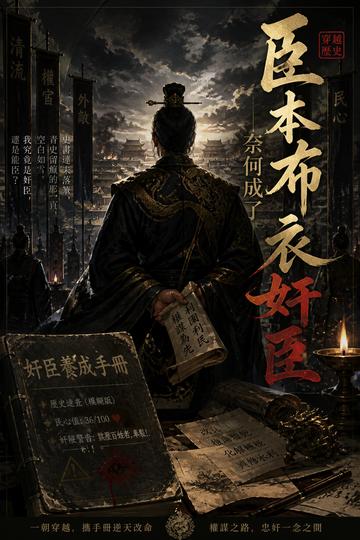
Chen Ke, a student of modern history, once traveled through time and became a farmer in Liuxi Village in the Dayong Dynasty who had just been forced to die by debt.
The rice jar at home was at the bottom, creditors blocked the door, and my sister was so hungry that her eyes glowed green.
Chen Ke's heart collapsed: How could I, a good young man with upright roots, become a traitor reserve?
Improving rice seeds, promoting composting, and resolving land disputes... While Chen Ke used his half-baked modern knowledge to help the village provide food and clothing, he complained crazily in his heart about this cannibalistic world.
However, in this dynasty where the emperor is fatuous, cronies are everywhere, and the border is full of chaos, talent is like a firefly in the night - if you are too conspicuous, you will be spotted.
From the county examination to the provincial examination, from the general examination to the palace examination, Chen Ke's strategy of "managing the world for practical purposes" stirred up a pool of spring water. Some people regarded him as the hope of a poor family, while others wished to get rid of him. In the whirlpool of power, step by step, he went from "wanting to have enough to eat" to "wanting to change this dynasty."
Here comes the question:
In this system, if you want to benefit the country and the people, you must first learn to use Machiavellian tactics; if you want to implement reforms, you must make allies, attack political opponents, and even occasionally do less "innocent" things.
The warnings in the manual are becoming more and more intensive, and the boundaries between loyalty, traitor, good and evil are becoming more and more blurred. Behind you is a reform blueprint that is gradually taking shape, but in front of you is an unknown end point where infamy and praise are intertwined.
The history book has not yet been written, and the page where the history has left traces is as blank as snow. Is he a traitor or a capable minister?