Spring, the twenty-seventh year of the Yuanjia era. Stone City.
The river surges eastward, never to return. The down-and-out scholar Xie Wangjin stands atop the city wall, measuring the land with a ruler and brush as he paints a map of the Jiankang Palace grounds for the imperial court.
By the Qinhuai River, inside the pleasure boat Dreamfloat, the songstress Su Hengwu plucks her pipa and sings “Lament for the South,” a song recounting the old dynasty's past. A jade pendant at her waist bears a dragon pattern engraved in secret.
A palace coup entangles their fates in flames and blood. The brush in his hand should have recorded the splendor of a golden age, but instead he is forced to paint a hellscape within the imperial city. Her hidden identity should have vanished with the dynasty, yet she is drawn into the shocking secret of a map passed down through the ages.
From then on, every stroke of ink he lays down traces the hidden veins of mountains and rivers, and every line she sings is a coded message carrying life-or-death secrets.
From the last fading light of Liu Song, through the Hou Jing Rebellion under Xiao Liang, to the tragedy at the Rouge Well in Southern Chen… He is a walking “Records of Rivers and Seas,” while she is a living “memory of a dynasty.”
He paints the city. She guards its secrets.
When Sui forces finally storm Jiankang, they face one final choice:
Should they burn the Chronicles of the Realm, filled with geography, military strategy, secret history, and deep affection, or let it sink to the riverbed, hidden in the heart of the mountains?
Xie Wangjin holds the brush; Su Hengwu grinds the ink.
On the final page, they write:
“The mountains and rivers cannot speak, but those who have seen them will remember on their behalf.”
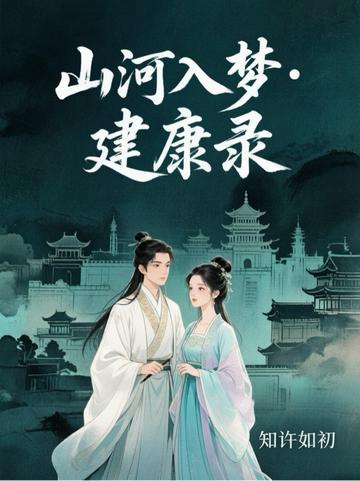


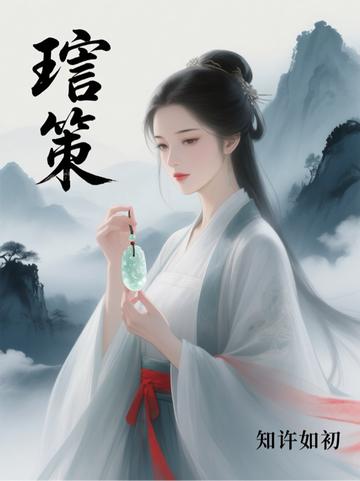





The structure of the story is well-conceived: the mountains and rivers are the scroll, and the construction of Kangcheng is the guide, which leads to the story of the painter and the heroine working together to build Kangcheng. There are epics and stories. The writing is smooth and the plot is closely linked. It's so classic. The text description is immersive. People who like history will love it.