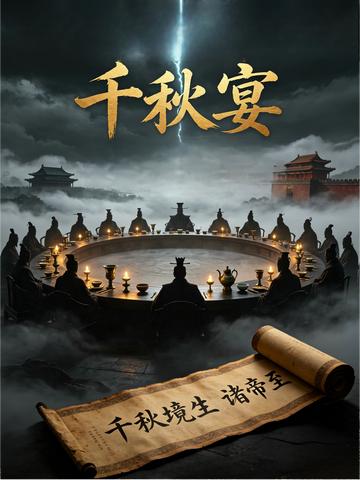
Yingzheng passed away, but his obsession persisted, and his historical thoughts condensed into a thousand-year realm. Over the next two thousand years, thirty-six founding emperors such as Liu Bang, Li Shimin, Zhao Kuangyin, Zhu Yuanzhang, and Kublai Khan returned here one after another, and attended a banquet that transcended dynasties.
The historian is in the environment, recording the rise and fall without any intervention; the emperor is the guest, taking off his crown to reveal the human heart. They were once rivals in the world, and they were monarchs with mixed reputations. Here they put aside their power disputes and faced their regrets in life: Ying Zheng lamented the death of Qin II, Li Shimin was ashamed of the Xuanwu Gate incident, Zhao Kuangyin missed Chai Rong's old kindness, and Zhu Yuanzhang was affectionate after his pregnancy.
The cracks connect to the present world, the evaluation of later generations turns into fluctuations in mental power, and the storm of reversal of the verdict causes turmoil in the world. The emperors either fought for orthodoxy, sought relief, or wanted to convey the truth to the world. In disputes and reconciliations, they took off their symbolic cloak and revealed the joys and sorrows of mortals.
This is not a fight for power, but the echo of the souls of the imperial statues. When the words of history books come alive in the human world, we will know that emperors throughout the ages are ultimately sentient beings.