At twenty-seven, Su Jingyun felt that Hangzhou was a city folded in two.
On one side were the evening breeze along the Qiantang River, sunsets over West Lake, and glittering lights beyond the floor-to-ceiling windows of office towers.
On the other were the lingering moldy smell in her shared apartment, the sardine-packed morning rush on Metro Line 1, and her landlord's monthly rent increase notice.
She had spent three years in this city.
She'd had a relationship that almost led to a down payment on a home, and she'd started a business that burned to the ground.
People came and went, then came and went again. Some betrayed her, some went to prison, and some remained forever on the twenty-eighth floor.
Her mother kept asking from the other end of the phone, “Come home. I'll set you up on a blind date.”
She bought a ticket three times and tore it up three times.
This isn't a story about turning your life around.
It's about an ordinary woman beneath the crushing wheels of capital, getting back up again and again, wiping her face clean, and saying:
“I'm not leaving.”
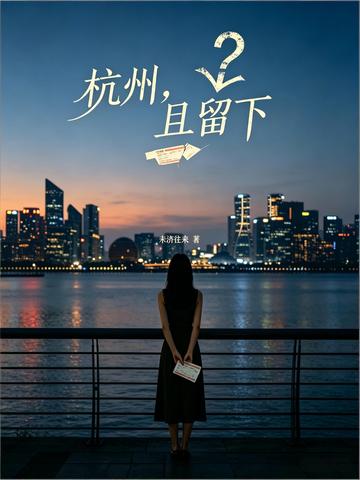
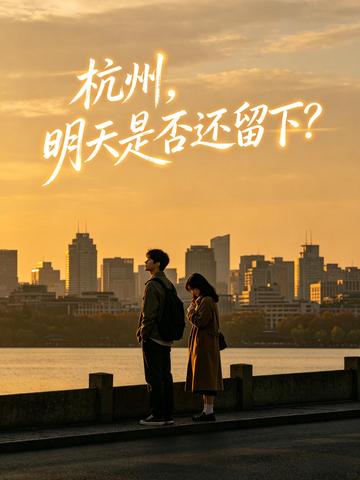


"Hangzhou, Stay" is not a refreshing novel in the traditional sense, but a thorough "disenchantment". When Su Jingyun deleted the ticket to return to her hometown and turned her savings of more than 10,000 yuan into war funds, what she faced was not only the web of betrayal woven by Liu Min and Jiang Chen, but also the "disillusionment" forced on strangers by this steel forest.
It is a complete story with a protagonist, a villain, suspense, and an ending. But it At the same time It accurately records the daily life of IT practitioners in Hangzhou: renting, commuting, working overtime, outsourcing discrimination, age anxiety, blind dates, difficulty in seeing a doctor, landlords raising rents, industry closures... This is actually the most ideal form: Use the shell of novels to contain the core of records . Don't let reality overwhelm the narrative, and don't let the narrative break away from reality.