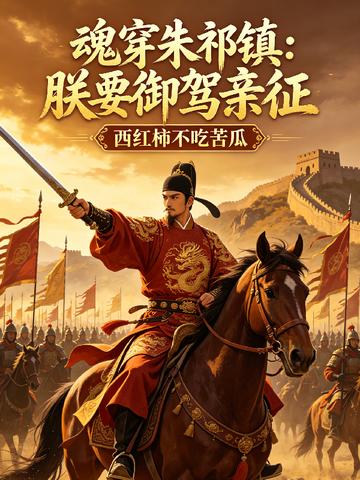
In the 14th year of Orthodoxy, Lin Zhaoyi, a graduate student in the history department, woke up and became Emperor Zhu Qizhen of the Ming Dynasty.
When I opened my eyes, it was the eve of the Tumubao Incident. The army of 500,000 was about to be destroyed, Yu Qian was about to die unjustly, and he himself would be captured by Wala, imprisoned by his brother for seven years, and kill a generation of loyal ministers after the restoration - the label of "faint emperor" in the history books would accompany him throughout his life.
"Since I have come to this point," he looked at the huge map on the wall, the corner of his mouth slowly curved, "aren't I here to rewrite history?"
Capture Wang Zhen, use Qian to train the new army, and create a three-stage firearm formation. When the 50,000-watt iron cavalry encountered an unprecedented firepower network at Yao'er Ridge, Ye Xian finally realized that the "puppet emperor controlled by the eunuch" in the intelligence had already changed his soul.
But victory on the battlefield was just the beginning. Above the court, the soft nails of the civil service group, the desperate counterattack of Wang Zhen's gang, and the assassins who quietly arrived in the middle of the night all told him the truth: in the Ming Dynasty, those who blocked people's way of making money were more worthy of death than those who rebelled.
On one side is the grassland surrounded by powerful enemies, and on the other side is the court with surging undercurrents. Can a soul from six hundred years in the future fight its way through the turbulent fifteenth century?
"I will pull out these people hiding in the dark one by one - not for revenge. It is so that they will never touch my people or the future of this country."