On a rainy night ten years ago, all her mother left her before dying was one sentence: Don't let them see your face.
Ten years later, his younger sister dreamed of a theater that had burned down long ago. A strange order drew Ning Jin back to Qingwu Street.
The Spring Immortality Theater, which should not exist, opened its doors once more. Masks turned around, an old play began, and all living things were onstage.
To save his sister and uncover the truth behind his mother's death, Ning Jin had no choice but to step onto the stage, tear off faces, borrow appearances, and rewrite the script, picking up the unfinished play from ten years ago.
But he soon discovered that he wasn't someone who had been dragged into the play.
He was meant to be onstage all along.
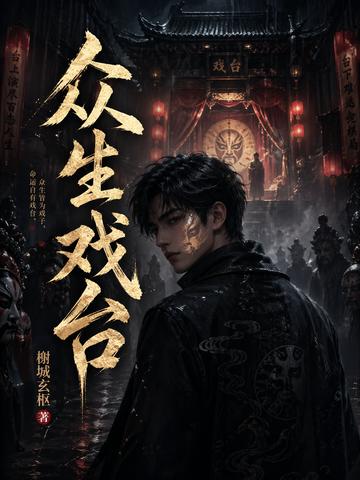

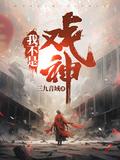
My first impression of "The Stage of All Living Beings" was not that it was simply "cunning", but that it was very interesting. The most fascinating thing about this book is that it combines the elements of "stage, mask, fate, and role" into a very unified whole. The old street on a rainy night, the Changchun Theater, the Zhaogu Well, the roll call backstage, the "faces" starting to grow in the hospital... These scenes are not the scary ones of ordinary supernatural novels, but have a clear sense of Chinese weirdness and fate, and are highly recognizable. Looking at it so far, this book has several obvious advantages: First, there is a strong sense of atmosphere. The opening sentence "Don't let them see your face" is very memorable. Later, things like the stage, masks, and old corners are turned outward layer by layer, and the sense of oppression is established. Second, the main line hook is stable. It's not a simple encounter with evil, but Ning Jin was almost "written into the play" ten years ago. Now that the old play is reopened, her sister Ning Xiaoman is also involved. The main plot contains both suspense and family affection, making it a never-ending read. Third, the setting has potential. The words "tearing off the surface, borrowing the phase, fixing the angle, correcting the original, mending the stage, the pen, the line" already have their own sense of system. It can be seen that the author does not just want to write a weird story, but wants to build a world of rules. Of course, there are still some areas in this book that need further polishing: 1. Some concepts are not easy to understand. Settings such as "pen, line, and revision" are very interesting in themselves, but if the explanation is not smooth enough in the early stage, readers will have a feeling but not fully understand. 2. Pay attention to the ups and downs behind the rhythm. It's okay to push forward with high pressure to catch people in the early stage, but you can't hold it tight all the time in the long game. If there is more character buffering, emotional sedimentation, and relationship advancement later on, this book will be more enjoyable to read. 3. Group portraits have great potential, but they need to continue to be developed. Characters such as Ah Zhi, White-faced Man, Wen Ruhui, and Ning Xiaoman are already recognizable. If they can be given clearer highlights and fate lines later, the book will be thicker. Generally speaking, "The Stage of All Living Beings" is not the kind of novel that is purely refreshing, purely fast, and purely lively. It is more like a long novel with a heavy flavor of suspense and fantasy, and the setting and atmosphere are advanced in parallel. If you like Chinese ghost stories, rule-based world views, and stories with a sense of fate, this book is worth continuing to read. One sentence summary: The most attractive thing about this book now is not just its "weirdness", but that it has slowly developed a whole set of story skeletons about "faces, characters, and destiny." As long as the setting is explained clearly and the characters are thickened later, it will have a good chance of creating memorable points.