In the winter of 976 AD, Song Taizu Zhao Kuangyin died suddenly, and his younger brother Zhao Guangyi came to the throne as Song Taizong. The suspicion of this "candle shadow and the sound of the ax" shrouded the Song Dynasty for twenty-two years. During Zhao Guangyi's reign, he completed the unification of the south, destroyed the Northern Han Dynasty, made two northern expeditions to the Khitan, and launched a protracted tug of war with Li Jiqian of the Western Xia Dynasty. However, he was defeated twice in the land of Youyan, which finally established the basic pattern of the confrontation between Song and Liao for the next hundred years.
This was an era in which civil society was at its peak but martial arts was still unfinished. Under the national policy of emphasizing civility over military affairs, military generals not only carried the dynasty's ideals of opening up territories, but they were also hampered by suspicion and constraints - the constraints of the supervisory army, the remote control of formations, and the system design of "controlling from the center" made it difficult for these bloody men to fulfill their ambitions. And it was in such a crack that families of generals sprung up like mushrooms after a spring rain: generals from the Zhe family, generals from the Yang family, generals from the Cao family, generals from the Zhong family... Formed the densest group of military general families in ancient China.
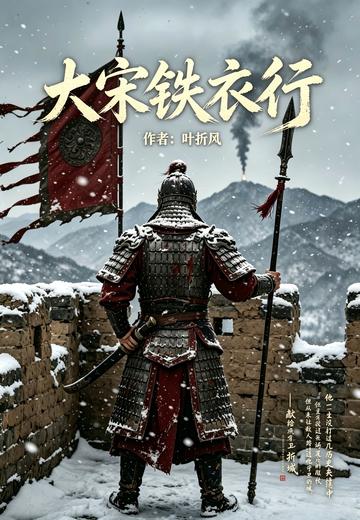
This book is about a general who rose from the bottom on this stage where glory and tragedy intertwined - Li Yunzheng (also known as Tieyi). He followed Taizong of the Song Dynasty for more than 20 years and witnessed major battles such as the expedition against the Northern Han Dynasty, the siege of Youzhou, the Yongxi Northern Expedition, and the bloody battle of Junziguan. Finally, in his later years, he faced the rise of Xixia under Li Jiqian. His life is the epitome of the military rise and fall of the Taizong Dynasty. It is also an epic story of a generation of military generals looking for dignity and belonging in the era of "emphasis on civility and neglect of military affairs".